Anthropic: Watermarks, Withdrawal Tools, and Legal Uncertainty in Europe
Le brief IA que les pros lisent chaque soir
Les 7 actus IA du jour, décryptées en 5 min. Gratuit.
Inclus dès l'inscription : notre sélection des meilleurs guides & comparatifs IA.
Choisis ton rythme
Gratuit · Pas de spam · Désabonnement en 1 clic
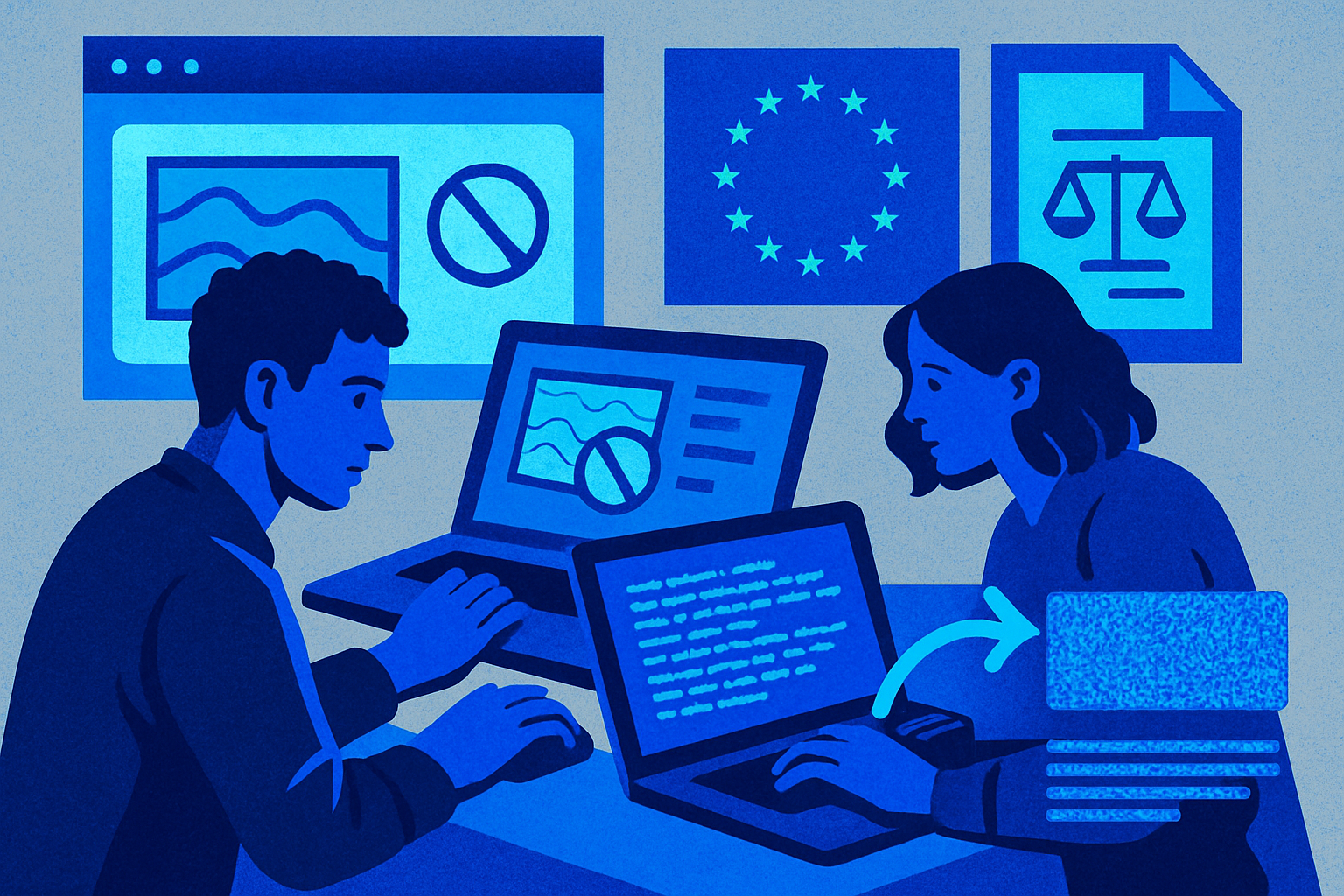
Anthropic introduces an imperceptible watermark in texts generated by certain Claude models, with deployment starting on August 2 and a detection API announced. Meanwhile, developers are releasing tools to erase these traces, while European law primarily regulates providers and researchers remind us of the technical limitations of watermarking.
Removing a watermark is not prohibited, but the EU mandates robustness
The European Union requires AI providers to add durable labels and make their watermarking systems resilient against common modifications and adversarial actions. Its transparency code specifically lists removal, regeneration, copying, and modification among the threats to be assessed. However, the AI Act does not explicitly prohibit third parties from attempting to remove a watermark, according to Dmitri Roussinov, who adds that if a removal involves AI-assisted regeneration, the provider of the tool may need to watermark this new output. Konrad Kollnig believes that neither the European text nor Anthropic's conditions seem to prohibit the creation or sharing of removal tools, while warning of the risks if these tools are used to pass off AI-generated content as human. Anthropic's usage policy actually prohibits such imitation. The company also plans to release a text detection API with its upcoming model, although no timeline has been announced. In terms of scope, the watermark applies to new models released from August 2, and Anthropic plans to extend it to older models.
Technical limitations highlighted: rephrasing remains a workaround
For Thibaud Gloaguen, a researcher at ETH Zurich, there will always be ways to remove a watermark, for example, by rephrasing an entire text. This observation comes in a landscape where Google and OpenAI already use watermarks for images, against which tools promising their removal are proliferating. Konrad Kollnig further points out that once a watermark detector is made public, it becomes possible to compare AI-generated content to this detector and build tools capable of erasing these marks.
A wave of removal tools: open source, local, and web-based
In Paris, Guillaume Meyer, who founded Memo, launched an open-source project called Watermarks Remover just days after Anthropic's announcement. According to its creator, the tool removes invisible characters and metadata, then rephrases the text to retain its meaning, aiming to thwart statistical models that may incorporate a watermark. The first version of the project took about five hours to develop and has garnered over 14,000 stars on GitHub, although it does not guarantee removal every time. Sabrina Ramonov reports that she launched a free service accessible via browser this week, claimed to be capable of eliminating hidden marks in texts, PDF files, Word documents, web pages, images, and data files. In Tokyo, Ansh Aneja reports that on the day of Anthropic's announcement, he designed a tool dedicated to Claude, then offered a local and open-source version called MarkScrub; he notes a jump from zero to 8,500 users in just one day. These projects are still in their infancy.
Contested uses and the fear of a "binary authorship"
Watermarks divide users, with some even canceling their subscriptions to Claude. While Anthropic's stated goal is to facilitate the identification of generated texts, tech enthusiasts fear that a label could follow a work even when AI was only used for proofreading, translating, or summarizing. Guillaume Meyer states that he supports content attribution while opposing the watermarking technique, which he believes treats authorship as a binary choice, as marking can occur both during full generation and slight edits. Anthropic, for its part, indicates that its watermark is not intended to establish authorship.
How Anthropic's watermarking works and why it is being implemented
For the affected models, Anthropic describes an imperceptible watermark, defined as a statistical model derived from Claude's word choices. The company states that this marking would travel with the text in the event of a copy-paste. It justifies its introduction by the need to comply with its commitments related to the European AI law. The system applies to new models released from August 2 and is set to be deployed to older models afterward.
Measurable demand for watermark removers
The desire to neutralize these markings has quickly stimulated the supply of tools: developers are already building and publishing solutions to make the labels disappear, and one project has gone viral on GitHub. In the United States, Google searches for "AI watermark remover" surged by 60% in one week. Entrepreneurs and developers are announcing tools aimed at both texts and various file formats.
Brief IA — L'actualité IA en français
L'essentiel de l'actualité de l'intelligence artificielle, décrypté et expliqué chaque jour.