Automotive: 70% of Manufacturers Invest in AI
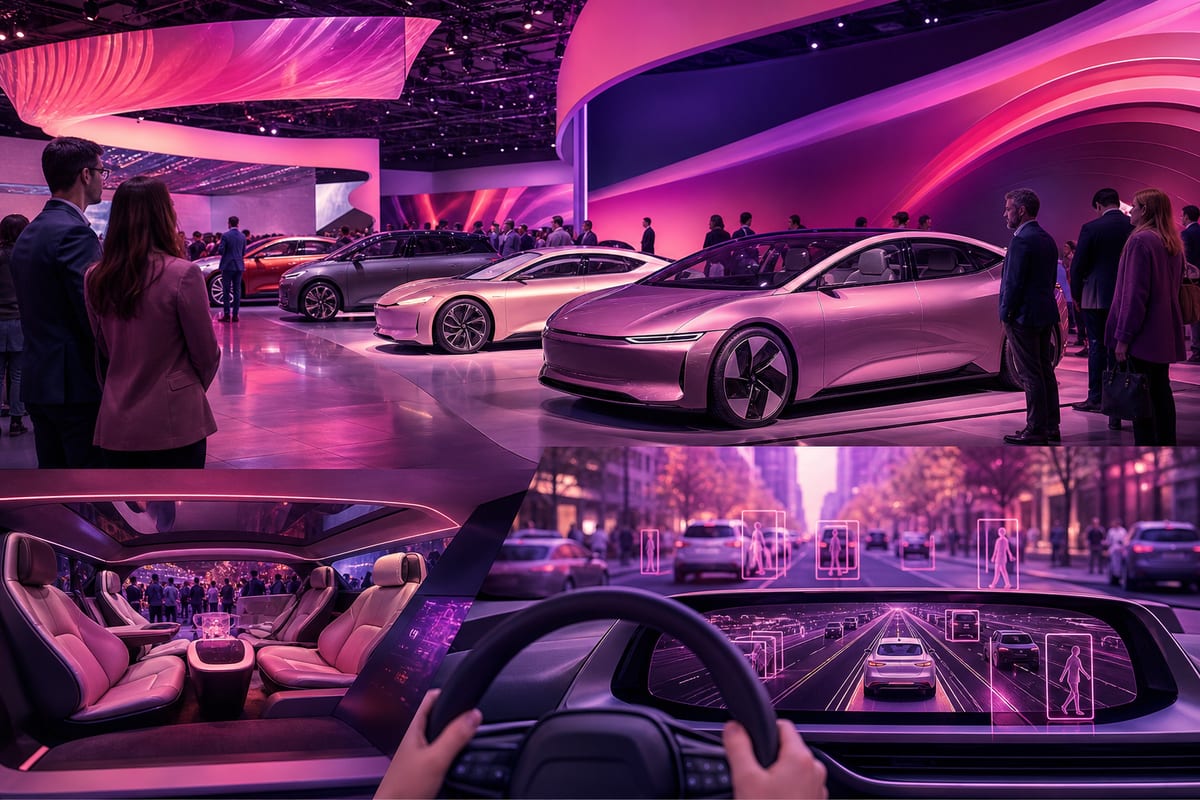
At the opening of the Mondial de l'Auto, AI, electrification, and autonomy dominate the agenda. About 70% of manufacturers are already investing in AI for safety and efficiency, while forecasts predict that electric vehicles will account for 30% of global sales by 2030. However, safety, regulation, and public acceptance will determine the pace of adoption.
Safety, Standards, and Acceptance Shape Adoption
Safety plays a central role in the evolution of automotive technologies. Autonomous vehicles are touted as capable of reducing road accidents, but they still face technical and ethical hurdles before becoming commonplace in daily use. Some consumers express doubts about the reliability of these systems, which could hinder their adoption. Regulators, for their part, are defining safety standards and proposing incentives to accelerate the adoption of more environmentally friendly technologies. In the coming years, regulation, safety, and public acceptance will be key factors in the development of the sector.
Embedded AI and ADAS Already in Vehicles
Nearly 70% of automotive manufacturers are investing in artificial intelligence to enhance the safety and performance of their models. These funds are used to deploy advanced driver assistance systems, relying on machine learning algorithms capable of assessing traffic conditions in real-time. These advancements are seen as potentially transforming the driving experience and improving safety on the roads. The transformation of the sector is thus centered around autonomous driving, electric powertrains, and vehicles designed with artificial intelligence.
Le brief IA que les pros lisent chaque soir
Les 7 actus IA du jour, décryptées en 5 min. Gratuit.
Inclus dès l'inscription : notre sélection des meilleurs guides & comparatifs IA.
Choisis ton rythme
Gratuit · Pas de spam · Désabonnement en 1 clic
Electrification: Expanding Market and 30% Target by 2030
The electric vehicle market is experiencing significant growth. According to forecasts, they could represent 30% of global sales by 2030. This growth is supported by favorable government policies and increased awareness of environmental issues. Electrification is thus becoming a central pillar of the upcoming automotive offering.
Strategies of Players and Expected Effects on the Ecosystem
Reactions vary among industry players. Major automotive groups are allocating resources to innovation and development to maintain their market position, while startups are leveraging their agility to capitalize on the opportunities presented by artificial intelligence and electrification. New players from the tech world are emerging, forcing traditional manufacturers to adapt their manufacturing processes and business models to integrate these new technologies. This context creates heightened competition where the capacity for innovation becomes a key factor. Collaborations between tech companies and automakers could emerge, leading to groundbreaking solutions. The rise of electric and autonomous vehicles has implications for the entire supply chain and could transform urban infrastructures and mobility services. The convergence of autonomous driving, electric power, and artificial intelligence is redefining mobility and business models as the Mondial de l'Auto opens and the automotive industry embarks on what is described as a radical transformation.
Brief IA — L'actualité IA en français
L'essentiel de l'actualité de l'intelligence artificielle, décrypté et expliqué chaque jour.