Bunkerhill Revolutionizes Health with $55 Million for Agentic AI
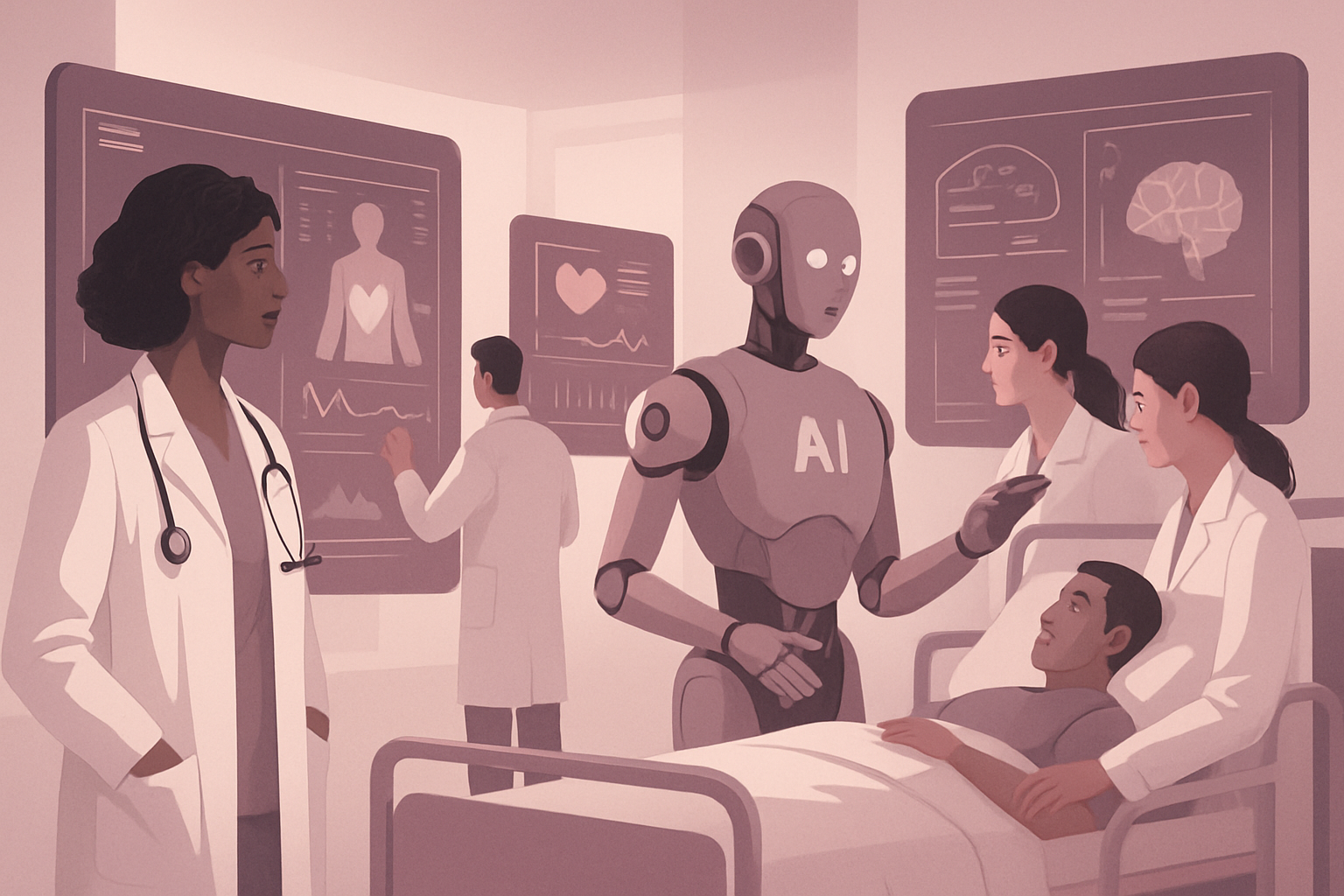
Bunkerhill Secures Major Funding for Health AI
Bunkerhill Health recently announced that it has raised an impressive $55 million to support the development of its agent-based artificial intelligence platform, called Carebricks. This funding round, which marks the closing of the company's Series B, saw continued participation from major venture capital names such as Sequoia Capital, Felicis, Optum Ventures, and Y Combinator. However, despite this financial success, a crucial question remains for hospital leaders: can this technology truly be effective in an operational hospital environment?
This inquiry is at the heart of the concerns that led Khosla Ventures to support this initiative. Many healthcare organizations have invested in machine learning pilot projects that, while effective in the lab, have never been integrated into real patient records.
Bunkerhill argues that its Carebricks platform is capable of bridging the gap between a theoretical model and practical, large-scale, real-time application in healthcare institutions.
A Context of Spending and Shortages
The healthcare sector in the United States is facing significant financial and human challenges. The Centers for Medicare & Medicaid Services estimate that healthcare spending will reach $5.3 trillion in 2024. At the same time, staffing shortages continue to weigh heavily on providers across the country.
Bunkerhill sees an opportunity here: to bridge the gap between healthcare systems' ambitions for their patients and the limited time staff have to realize them. For decades, massive investments have been made in documentation systems aimed at alleviating the burden on clinicians. Bunkerhill bets that the next wave of technological investments will focus on software capable of acting on clinicians' ideas, rather than simply recording them.
A Vision for the Future of Medicine
Nishith Khandwala, co-founder and CEO of Bunkerhill Health, stated: “Medicine has progressed faster than our healthcare system's ability to operationalize it. Every leading healthcare system has more opportunities to improve patient outcomes than its workforce has capacity to address. We believe that AI agents can help them realize more of these ideas.”
Carebricks allows hospitals to create their own agents, thus avoiding the need to purchase fixed products. These agents can, for example, analyze images in cardiology to detect heart diseases early and alert on patient follow-up needs. They can also manage prior authorizations or keep registry data up to date. Institutions like Cleveland Clinic, University of Texas Medical Branch, and Intermountain Health are already using this platform.
Le brief IA que les pros lisent chaque soir
Les 7 actus IA du jour, décryptées en 5 min. Gratuit.
Inclus dès l'inscription : notre sélection des meilleurs guides & comparatifs IA.
Choisissez votre rythme
Gratuit · Pas de spam · Désabonnement en 1 clic
Vinod Khosla, founder of Khosla Ventures, emphasized: “The bottleneck in health AI has never been the technology, but making a healthcare system work. Bunkerhill has bridged that gap. They have made AI adoption much easier and already have traction within critical healthcare systems that most companies would take years to achieve.”
AI Agents in Action at UTMB
The University of Texas Medical Branch (UTMB) provides a concrete example of the effectiveness of AI agents once integrated into a hospital system. Currently, more than 20 agents are active on the Carebricks platform, covering various areas such as clinical care, operations, and administration, according to Dr. Peter McCaffrey, head of AI at UTMB.
In the first month of use, an agent based on a FDA-approved algorithm detected an imminent risk of heart attack in a patient, allowing for a rapid and life-saving intervention by cardiology with a triple bypass.
Although this example is unique and not derived from a controlled trial, it illustrates the potential of AI to save lives. However, Bunkerhill has yet to publish data on the frequency of false positives or the agent's performance in a broader population.
Promising Results but to be Confirmed
The results reported by UTMB, stemming from the real-world use of Carebricks, are impressive. A nephrology triage agent has reduced wait times for specialists by over 50% by prioritizing patients based on the severity of their condition. Another agent, dedicated to monitoring lung nodules, improved response speed by 80% for urgent cases and doubled guideline-compliant follow-up, while reducing manual work for coordinators.
These results, while encouraging, reflect the specific data and staffing conditions at UTMB, without guaranteeing that other hospitals will achieve the same outcomes.
Dr. McCaffrey stated: “We have already seen a significant impact on patient care, and we are just at the beginning of what becomes possible when a healthcare system can operate with agent-based AI at this scale.”
Challenges in Expanding Carebricks
Despite these successes, healthcare systems still face many challenges in fully integrating agent-based AI. Bunkerhill plans to use the recently raised funds to expand the range of clinical and operational applications of Carebricks while strengthening the governance, monitoring, and assurances needed.
Allowing a department to create its own triage agent also means that department must take responsibility for the adjustments of that agent. Healthcare systems wishing to adopt Carebricks must therefore clarify issues of accountability, monitoring, and managing discrepancies between agents' and clinicians' judgments before proceeding to scale.
With the deployment of 20 agents at UTMB, Bunkerhill has a solid reference case that few competitors can match. The sustainability of this success will depend on how UTMB and other systems using Carebricks manage governance as the number of agents increases.
Brief IA — L'actualité IA en français
L'essentiel de l'actualité de l'intelligence artificielle, décrypté et expliqué chaque jour.