Agentic Design: The Decision Tree, Key to AI Model Selection
Le brief IA que les pros lisent chaque soir
Les 7 actus IA du jour, décryptées en 5 min. Gratuit.
Inclus dès l'inscription : notre sélection des meilleurs guides & comparatifs IA.
Choisis ton rythme
Gratuit · Pas de spam · Désabonnement en 1 clic
In a context where artificial intelligence (AI) is increasingly prevalent, the choice of the agentic design model is crucial for developing high-performing intelligent agents. These agents, capable of interacting with their environment and making autonomous decisions, must be designed to meet the specific needs of their users. This article explores various agentic design models and proposes a decision tree approach to facilitate the selection of the most appropriate model.
Agentic Design Models: Diversity and Specificities
Agentic design models can be categorized into several types, each with its characteristics and applications. Among the most common are rule-based models, reinforcement learning models, and those utilizing neural networks. Each model has its advantages and disadvantages depending on the context of use. For example, rule-based models are often simpler to implement but may lack flexibility in unforeseen situations. In contrast, reinforcement learning models, while effective for complex tasks, require significant computational resources and high-quality training data.
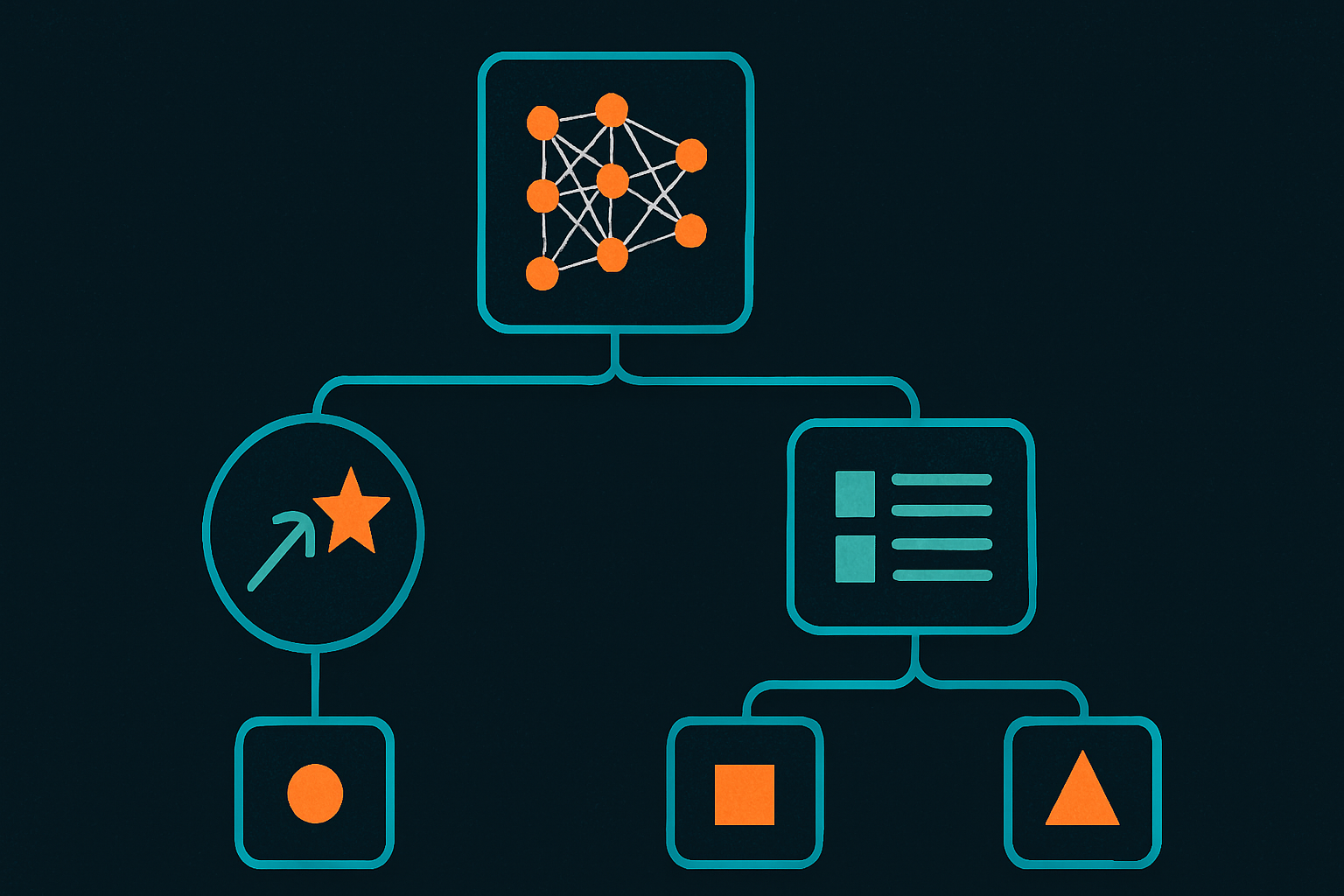
The decision tree approach proposed in this article allows for structuring the selection process by evaluating the specific needs of the project, available resources, and technical constraints. With this tool, developers can visualize the different options and their implications, thereby facilitating informed decision-making.
Impact on the Artificial Intelligence Sector
The judicious choice of an agentic design model is essential. An appropriate selection can transform the performance of AI systems in real-world applications, ranging from robotics to virtual assistance. For instance, in the healthcare sector, a well-designed intelligent agent can improve diagnostic accuracy and optimize treatments. Similarly, in the transportation sector, autonomous agents can contribute to more efficient traffic management and a reduction in accidents.
Moreover, the choice of the agentic design model can also influence user satisfaction. An agent that effectively meets user expectations is more likely to be adopted and integrated into daily processes. This underscores the importance of a user-centered approach in the development of intelligent agents.
Reactions and Future Perspectives
AI and agentic design experts commend the decision tree approach as a significant advancement in the field. It offers a systematic method for evaluating available options and could become a standard in the development process. However, some also point out that this method requires a deep understanding of the different models and their implications, which can pose a challenge for less experienced developers.
In the future, it will be essential to continue refining these approaches and integrating advanced data analysis tools to further enhance the relevance of model choices. The emergence of new technologies, such as machine learning and natural language processing, could also influence agentic design models, making selection even more complex and dynamic.
Brief IA — L'actualité IA en français
L'essentiel de l'actualité de l'intelligence artificielle, décrypté et expliqué chaque jour.