Home Instead: 30% Turnover Due to Matching AI
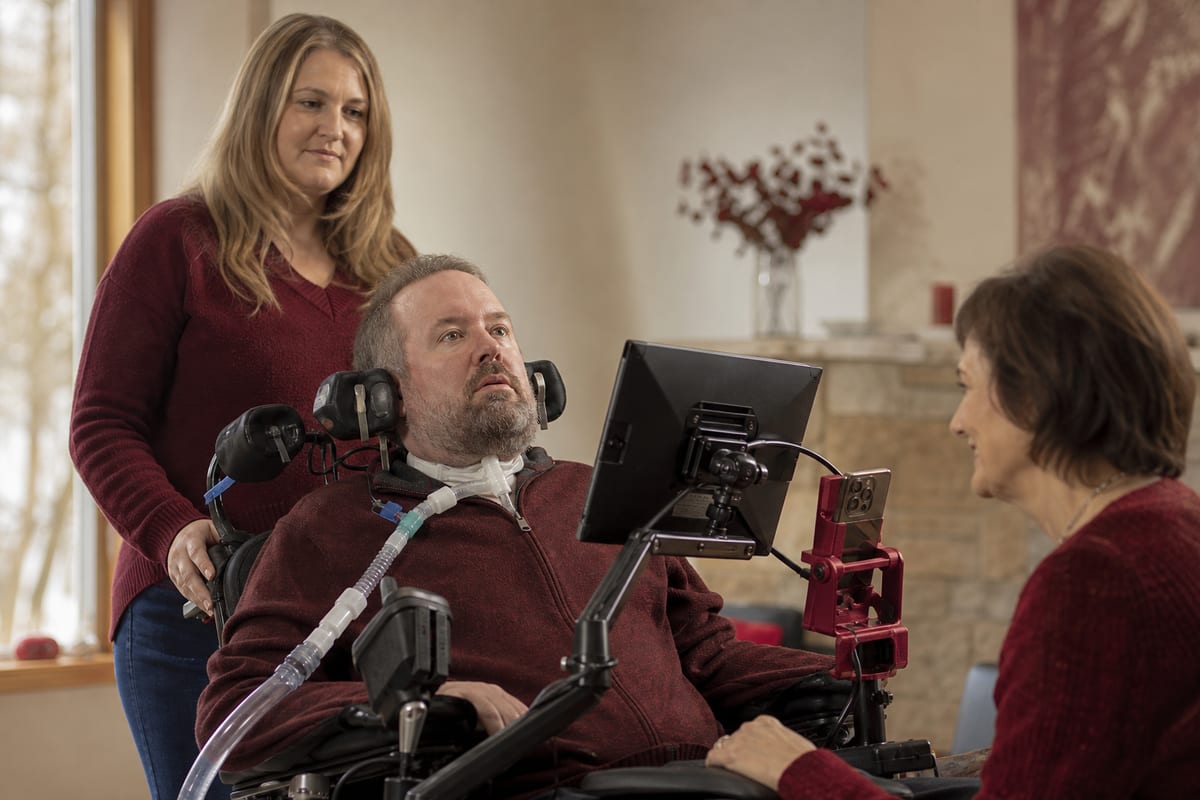
Honor Technology connects caregivers and clients of Home Instead using AI algorithms. The company claims to reduce staff turnover and streamline scheduling. The daily life of Merrill Hale, who has ALS, and Christina Evers, partially chosen by AI, illustrates this model where human oversight remains crucial.
Honor claims reduced turnover and AI orchestration of care
Seth Sternberg asserts that algorithms have helped decrease caregiver turnover, while clients are often more satisfied with their care. He estimates the annual turnover rate of caregivers at Home Instead to be around 30%, compared to 80% in the industry. The technology also reallocates visits in case of scheduling gaps and identifies additional training needs. Sternberg acknowledges that AI makes mistakes, just like humans, while arguing that it better incorporates feedback. He describes an orchestration of the complexity unique to each client and their history for smoother interactions. According to him, clients do not want to hear about the technology itself but rather understand why their caregiver or service is better.
Algorithmic criteria, human decision-making, and daily patience
Rachael McDermott indicates that Home Instead's AI is used to match criteria, but ultimately a human makes the final decision. She believes that Evers and Hale met the expectations: Evers is comfortable with technology, trained for high-acuity patients, and warm, while Hale is close in age and very dynamic. Christina Evers has been assisting Merrill Hale for three years, from 9 AM to 3 PM, Monday to Thursday. McDermott emphasizes that the response latency, which Merrill says is the most challenging part for him, is part of the reality of their exchanges. Evers adds that those around them are used to immediate responses and often forget to allow the necessary time, describing Merrill as the definition of resilience.
Communication through eye tracking and caregiving tasks
Merrill Hale uses advanced eye-tracking technology and controls his screen with his eyes to communicate with Christina Evers. The caregiver manages his bathing, daily preparations, and entertains him. In the early days with Evers, he could still speak and had more mobility. Despite his physical decline, their conversations remain lively, with recurring debates about music or sports. However, it often takes Merrill one to two minutes to formulate a response with his eyes. He states that technology is essential for his survival.
Le brief IA que les pros lisent chaque soir
Les 7 actus IA du jour, décryptées en 5 min. Gratuit.
Inclus dès l'inscription : notre sélection des meilleurs guides & comparatifs IA.
Choisis ton rythme
Gratuit · Pas de spam · Désabonnement en 1 clic
Home Instead network and developing matching algorithms
Home Instead is a home health network present in 1,200 locations across six countries. The company was acquired in 2021 by Honor Technology, which integrated AI algorithms and machine learning tools to match caregivers with elderly clients. Honor's technology analyzes availability, personality traits, skills, and previous familiarity of caregivers. Work patterns, such as ideal schedules and locations, are deduced from a large volume of data, and future events such as the risk of absence are anticipated. Seth Sternberg also notes that Honor is developing an algorithm that synthesizes a client's history into priority summaries, which has reportedly reduced processing time and facilitated decision-making in care.
The trajectory of Merrill Hale, his circle, and meeting Evers
At 57 years old and diagnosed with ALS a decade ago, Merrill Hale has gradually lost his speech, the ability to eat independently, and mobility. He recently underwent a tracheostomy, while his wife Karen, who works full-time, describes the difficulty of the role reversal in their caregiver-beneficiary relationship. His health has remained stable with a relatively slow progression. When he wished to prioritize home care, a friend recommended Home Instead; he admits he is not tech-savvy but recognizes the benefits. Before the onset of the disease, he played sports in high school, worked for twenty years as a draftsman and then an engineer for a railcar manufacturer, left that job to focus on music in a Led Zeppelin tribute band, and raised two children. His health began to deteriorate in his forties; ALS causes the destruction of motor neurons, leading to muscle weakness and loss of mobility. Judy, his mother, visits him almost daily; her husband passed away nearly three years ago, and she has moved to a nearby residence. Hale fuels his creativity with CAD software and a 3D printer, for which he designed a phone holder and a rose model for Evers. Christina Evers, a former military member, had enrolled in a master's program in psychology to work with veterans suffering from PTSD after the death of her previous client and was considering leaving the caregiving sector. She did not expect to become Hale's caregiver but decided to stay after a few sessions, partly due to the selection that brought them together. Hale says he feels lucky to have found her, describes the care as deeply personal, and looks forward to each visit. Judy describes him as very bright and believes that he and Evers have developed a strong bond.
Brief IA — L'actualité IA en français
L'essentiel de l'actualité de l'intelligence artificielle, décrypté et expliqué chaque jour.