AI: Regulating Without Stifling Innovation
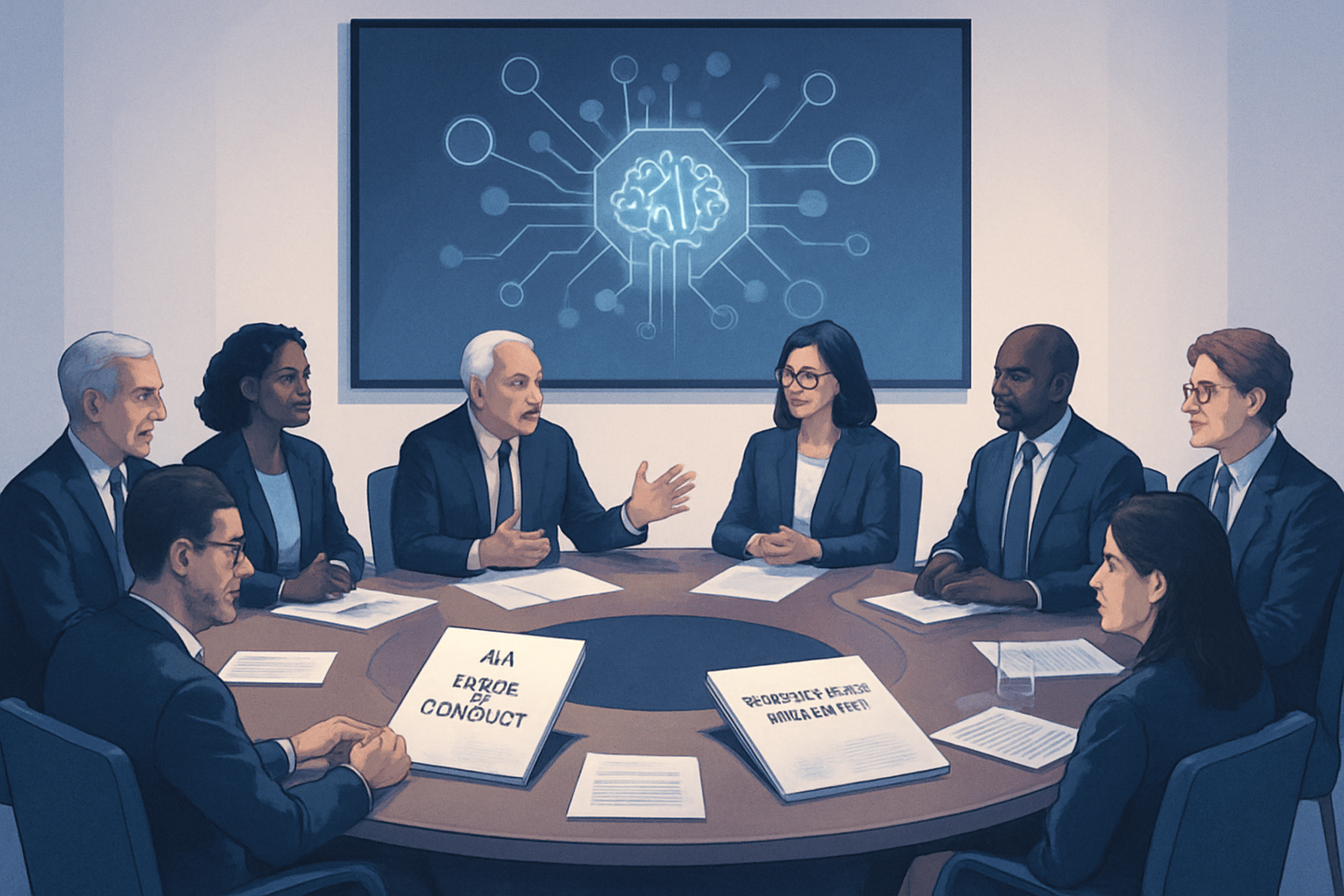
Calls for stricter rules, developing codes of conduct, and international negotiations are taking shape as artificial intelligence expands in health and finance. At the heart of the equation: capturing a potential windfall of $15.7 trillion by 2030 without losing public trust.
Stricter Rules and Codes in the Works
Organizations, including NGOs and think tanks, are calling for tighter regulation of artificial intelligence usage. Meanwhile, leading tech companies are beginning to develop internal codes of conduct, aiming to provide frameworks for other stakeholders. Governments are interested in implementing proactive regulation, while international discussions are underway to establish common standards. The rapid evolution of AI technologies makes regulation complex: it is about setting rules without stifling innovation. In this context, dialogue between businesses, public authorities, and civil society is deemed necessary to place ethical and regulatory issues at the center of discussions about the future of AI.
Projected Gains and Existing Use Cases
According to a recent study, artificial intelligence could generate up to $15.7 trillion in additional revenue for the global economy by 2030, presenting an opportunity for companies that can adopt these technologies. The fields of health, finance, and logistics are considered best positioned to benefit. In healthcare, AI systems are already processing significant volumes of data, facilitating the search for new treatments and personalizing care. In finance, AI contributes to real-time fraud detection. Furthermore, applying machine learning to medical diagnostics could significantly reduce costs and improve treatment accuracy.
Le brief IA que les pros lisent chaque soir
Les 7 actus IA du jour, décryptées en 5 min. Gratuit.
Inclus dès l'inscription : notre sélection des meilleurs guides & comparatifs IA.
Choisissez votre rythme
Gratuit · Pas de spam · Désabonnement en 1 clic
Without Safeguards, Unintended Effects Are Feared
Establishing ethical standards is presented as a priority to prevent abuses. Without regulation, artificial intelligence can introduce biases into decisions, infringe on privacy, or have unforeseen consequences on employment. Misuse of these technologies could also undermine consumer trust and expose companies to legal repercussions.
What Is Expected from Companies
Artificial intelligence is set to transform industries, which requires sector players to maximize benefits while minimizing risks. Beyond innovation, they are expected to design transparent and responsible systems. A proactive approach to ethics can help avoid scandals, enhance brand image, and attract talent. As AI technologies continue to evolve, the ethical and regulatory challenge is presented as crucial for the coming years. The transformation of industries through AI is considered inevitable, but it must occur in respect of ethical values and public trust.
Brief IA — L'actualité IA en français
L'essentiel de l'actualité de l'intelligence artificielle, décrypté et expliqué chaque jour.