IEEE: AI to the Rescue of America's Struggling Power Grids
Le brief IA que les pros lisent chaque soir
Les 7 actus IA du jour, décryptées en 5 min. Gratuit.
Inclus dès l'inscription : notre sélection des meilleurs guides & comparatifs IA.
Choisis ton rythme
Gratuit · Pas de spam · Désabonnement en 1 clic
An Electrical Grid Under Pressure
The electrical grid of the United States, one of the largest and most complex in the world, is currently on the brink of saturation. This situation results from several factors, including rapid industrial growth, increasingly frequent extreme weather events, and electricity consumption reaching historic highs. According to the U.S. Department of Energy, these combined elements are putting significant strain on the grid.
Historically designed for a world where energy was primarily produced by coal or gas plants, the grid now faces unforeseen challenges. The growing demand from data centers, for instance, has transformed the responsibilities of infrastructure professionals. They must now contend with complex and rapid challenges, far beyond traditional engineering tasks.
The millions of modern digital sensors, smart meters, and network monitors today generate a continuous stream of information. This volume of data requires instant and automated computational analysis, as human operators cannot process this information quickly enough.
Pressures and Challenges of the Grid
Utilities are under pressure due to two main factors: a growing demand for electricity and a shift in energy production methods. A striking example of this pressure can be observed in Texas, where the largest electricity transmission service recently reported a staggering demand for 220 gigawatts of new connections. This increase is primarily due to the rise of AI and cloud computing facilities.
At the same time, global energy networks must integrate a variety of renewable energies, such as wind and solar, which depend on weather conditions. This variability creates an unstable operational environment where the balance between supply and demand must be maintained in real-time to avoid outages.
The challenges are exacerbated by the physical and digital vulnerabilities of the grid. Extreme weather events, such as winter freezes in Texas or heatwaves, cause costly disruptions. Additionally, the transition to digital equipment exposes the grid to cyberattacks.
To overcome these physical and digital vulnerabilities, grid reliability organizations, such as those conducting security simulations in North America like GridEx, emphasize the need to make the grid smarter, more agile, and fully automated. Energy researchers stress that integrating AI at all levels of utility operations is essential to achieve this goal.
AI, A Necessity for the Grid
The use of AI to manage electrical systems is no longer a futuristic option but an operational necessity. Traditional planning methods are no longer sufficient to manage rapid energy dynamics or balance renewable energy in real-time within decentralized systems like microgrids.
AI can process vast amounts of data instantly. Machine learning algorithms quickly analyze information from sensors, historical usage patterns, and weather forecasts to anticipate problems.
A study by McKinsey & Co. highlights that integrating advanced data and automation into infrastructure networks could reduce design errors, decrease equipment downtime by up to 50% through predictive maintenance, and extend the lifespan of electrical machines by up to 40%.
From forecasting consumption peaks to automatically correcting localized voltage drops, AI acts as the digital backbone of a self-healing grid. The deployment of these complex systems requires a new workforce: electrical engineers who understand data science, as well as data scientists who understand electricity.
Training a New Generation of Engineers
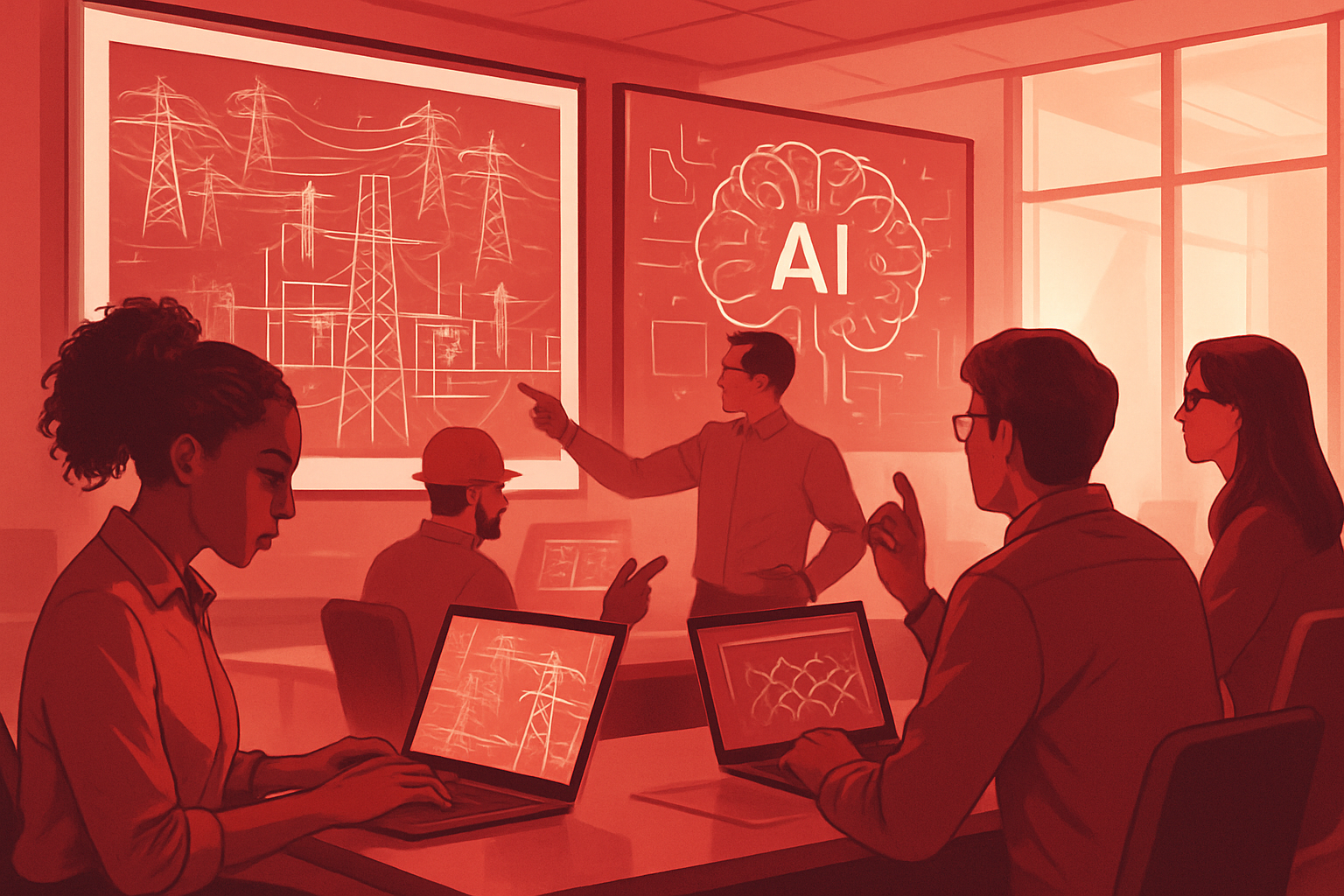
To bridge the gap between AI research and practical application, IEEE has launched an online course program titled Artificial Intelligence for Energy and Electric Systems. This program aims to educate electrical systems engineers, utility managers, and data scientists on modernizing the grid.
Developed by Fangxing “Fran” Li, a professor of electrical engineering and computer science at the University of Tennessee at Knoxville and chair of the IEEE Working Group on Machine Learning for Power Systems, this program addresses the fundamental challenges of modern utilities. It emphasizes security, asset preservation, and strict reliability standards.
Learning Modules of the Program
The program consists of five modules that connect theory to concrete solutions:
-
Fundamentals of AI: Teaches how machine learning models apply to electrical networks, including the use of neural networks to solve complex energy flow calculations and how these models can safely transition from computer simulations to high-voltage physical equipment.
-
Accelerating Grid Control: Trains learners to use deep reinforcement learning to speed up automated grid adjustments during emergency events.
-
Forecasting and Data Analysis: Engineers learn to predict demand peaks, variations in renewable energy production, and fluctuations in wholesale electricity prices to keep electricity affordable and available.
-
Physics-Informed and Safe AI: Covers AI models that adhere to the laws of physics to ensure that algorithms do not make erratic decisions.
-
Generative AI and Next-Generation Technologies: Explores cutting-edge technologies, such as graph neural networks, to streamline utility planning and emergency responses.
This program aims to transform systemic risks into grid resilience through better understanding and utilization of AI.
Brief IA — L'actualité IA en français
L'essentiel de l'actualité de l'intelligence artificielle, décrypté et expliqué chaque jour.