ASML Increases EUV Machine Production for AI
Le brief IA que les pros lisent chaque soir
Les 7 actus IA du jour, décryptées en 5 min. Gratuit.
Inclus dès l'inscription : notre sélection des meilleurs guides & comparatifs IA.
Choisis ton rythme
Gratuit · Pas de spam · Désabonnement en 1 clic
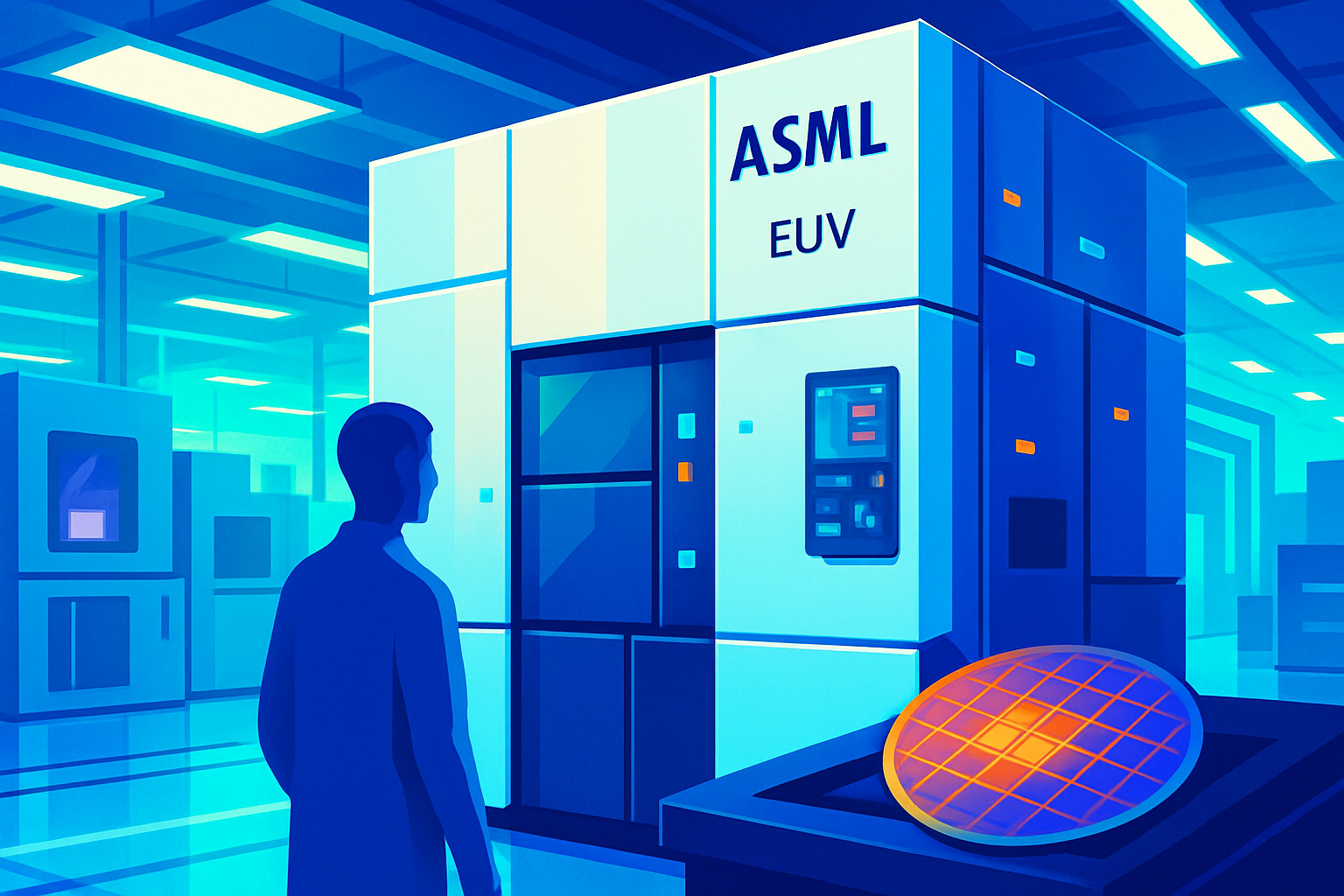
ASML, the Dutch technology giant, is positioning itself as a key player in the field of lithography, particularly thanks to its extreme ultraviolet (EUV) lithography machines. As the demand for chips dedicated to artificial intelligence (AI) experiences exponential growth, ASML plans to significantly increase its production of these critical machines. This initiative aims to meet the growing needs of semiconductor manufacturers, who are looking to develop more powerful and efficient chips to fuel innovations in AI.
Technical Details or Key Figures
ASML's EUV lithography machines are essential for the manufacturing of cutting-edge integrated circuits. By using extremely short wavelengths of light, these machines enable the etching of increasingly smaller patterns on silicon wafers, making it possible to produce chips with transistors smaller than 5 nanometers. ASML has announced that it will increase its production of these machines by 30% over the next two years, with the goal of delivering up to 60 units per year by 2025. This increase is crucial, as companies like NVIDIA and AMD, which focus on developing processors for AI, heavily rely on these advanced technologies.
Impact and Consequences for the Sector
ASML's increase in production could have significant repercussions for the entire semiconductor sector. By facilitating the manufacturing of more advanced chips, ASML could not only meet the growing demand from tech companies but also accelerate innovation in the field of AI. This could enable the development of new machine learning algorithms, faster data processing systems, and more sophisticated AI applications across various sectors, ranging from healthcare to automotive. Furthermore, this momentum could also strengthen ASML's position against its competitors, such as Nikon and Canon, who are trying to catch up in the field of EUV lithography.
Reactions and Outlook
Industry analysts are praising ASML's initiative, noting that it could help alleviate bottlenecks in the semiconductor supply chain. However, some experts warn of the logistical and technical challenges associated with increased production. The complexity of manufacturing EUV machines, which requires high-precision components and advanced technologies, could pose capacity issues for ASML. Additionally, the surge in demand could also lead to resource tensions, particularly concerning the rare materials needed for chip manufacturing.
Companies in the AI sector, for their part, express high expectations regarding the impact of this production increase. Market leaders like Google and Microsoft are investing heavily in AI and rely on increasingly powerful chips to drive their innovations. ASML's ability to meet this demand could therefore play a decisive role in how these companies evolve and position themselves in the market.
In conclusion, ASML's initiative to increase its production of EUV lithography machines is a major issue to watch in the coming months and years. As the demand for AI technologies continues to grow, ASML's capacity to provide cutting-edge machines could not only transform the semiconductor landscape but also influence the entire technology sector. Industry players will need to closely monitor this dynamic, as it could redefine standards of innovation and competitiveness in an ever-evolving market.
Brief IA — L'actualité IA en français
L'essentiel de l'actualité de l'intelligence artificielle, décrypté et expliqué chaque jour.