The EU mandates mandatory labeling of AI content starting August 2026
The EU Mandates Mandatory Labeling of AI Content Starting August 2026
August 2, 2026, marks a key date for companies operating within the European Union. Indeed, the transparency obligations of the AI Act regarding content generated by artificial intelligence will come into effect. To facilitate this transition, the European Commission unveiled a Code of Good Practices on June 10. This guide is designed to help companies comply with the new AI content labeling rules.
What the AI Act Requires from Companies Starting Sunday
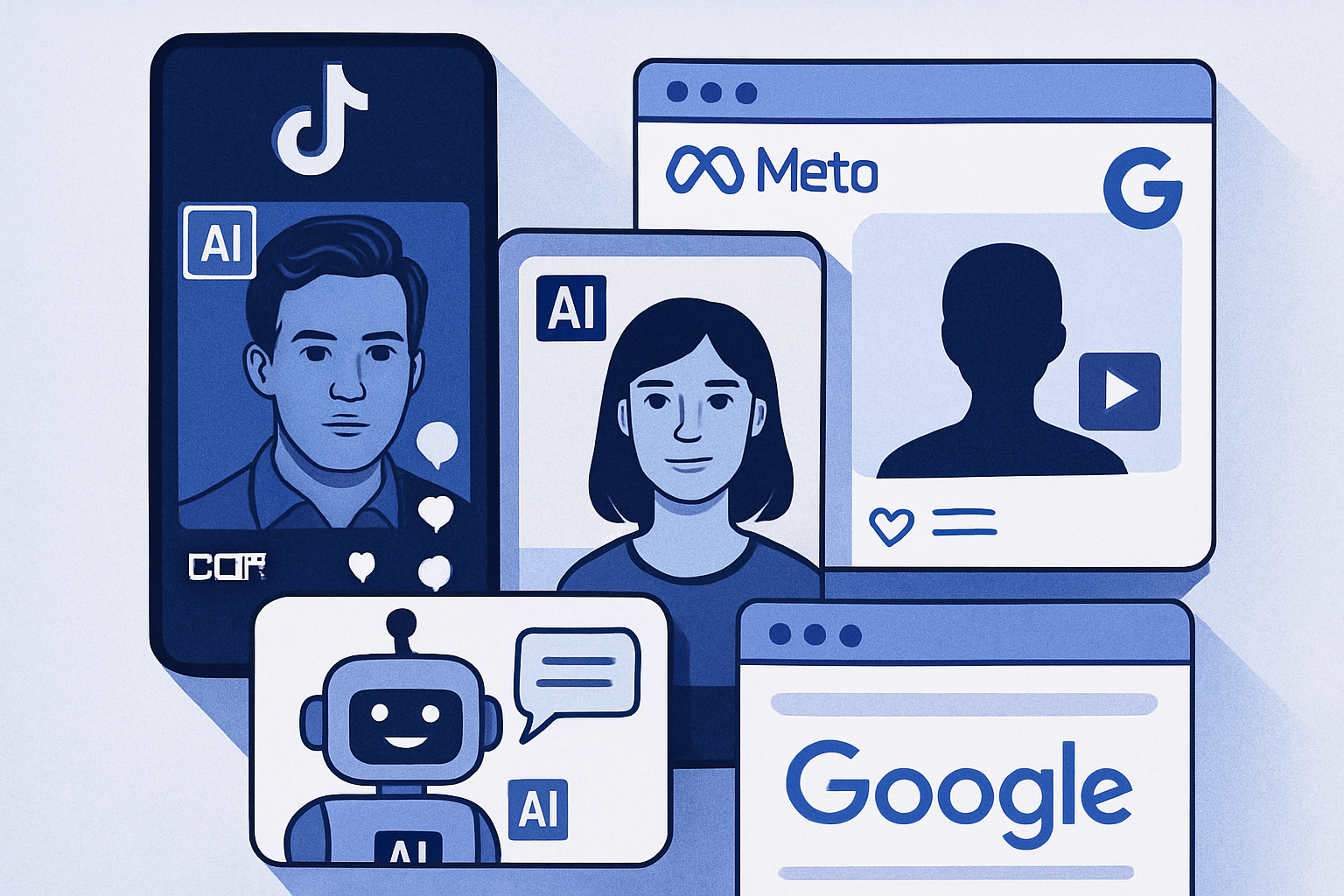
From August 2, 2026, any technology using artificial intelligence to interact with the public, such as chatbots, agents, or virtual avatars, must be clearly identified. Companies that publish deepfakes or AI-generated texts without human intervention will also need to indicate this. The European Commission has provided templates for icons such as "AI," "generated by AI," or "modified by AI" for companies to label their content. A representative from the Commission emphasized the importance of this measure in maintaining citizens' trust in the content they consume online.
Although the new rules apply immediately to new content, a grace period until December 2, 2026, is granted for existing AI systems. Transparency is crucial to ensure that Europeans know whether the content they consume has been influenced by AI, especially in the context of public debate.
Le brief IA que les pros lisent chaque soir
Les 7 actus IA du jour, décryptées en 5 min. Gratuit.
Inclus dès l'inscription : notre sélection des meilleurs guides & comparatifs IA.
Choisissez votre rythme
Gratuit · Pas de spam · Désabonnement en 1 clic
Henna Virkkunen
Executive Vice-President for Technological Sovereignty, Security, and Democracy, European Commission
AI Content Labeling: A Bureaucratic Nightmare for Companies?
Some platforms have already taken steps ahead of this regulation. TikTok claims to have labeled over 3 billion pieces of content using its detection tools. Meanwhile, Meta has introduced an "AI Info" label on Instagram and Facebook. Google, for its part, has signed the European Code of Good Practices and is collaborating with Nvidia, OpenAI, and Apple to develop digital labeling solutions like SynthID.
However, these initiatives have not prevented the emergence of criticism. Several stakeholders fear that Brussels may ultimately impose widespread labeling of all online content as AI becomes more integrated into the European economy. Karen Massin, Google's head of European affairs, warns against regulatory complexity that could be counterproductive. Ashley Casovan, director of an AI governance center, compares this situation to the cookie consent banners under the GDPR, noting that solutions always tend to emerge.
AI Labeling: Which Content is Affected?
The following content is subject to the labeling requirement:
- Deepfakes, meaning images, sounds, or videos imitating a real person.
- Informative texts generated by AI, without human editorial oversight.
- Chatbots, agents, and conversational avatars using AI.
Conversely, certain content is exempt from this requirement:
- Artistic, satirical, fictional, or creative works.
- AI-generated texts that have undergone human editorial oversight.
Brief IA — L'actualité IA en français
L'essentiel de l'actualité de l'intelligence artificielle, décrypté et expliqué chaque jour.