Agentic traffic challenges the automatic adjustment of resources
Le brief IA que les pros lisent chaque soir
Les 7 actus IA du jour, décryptées en 5 min. Gratuit.
Inclus dès l'inscription : notre sélection des meilleurs guides & comparatifs IA.
Choisis ton rythme
Gratuit · Pas de spam · Désabonnement en 1 clic
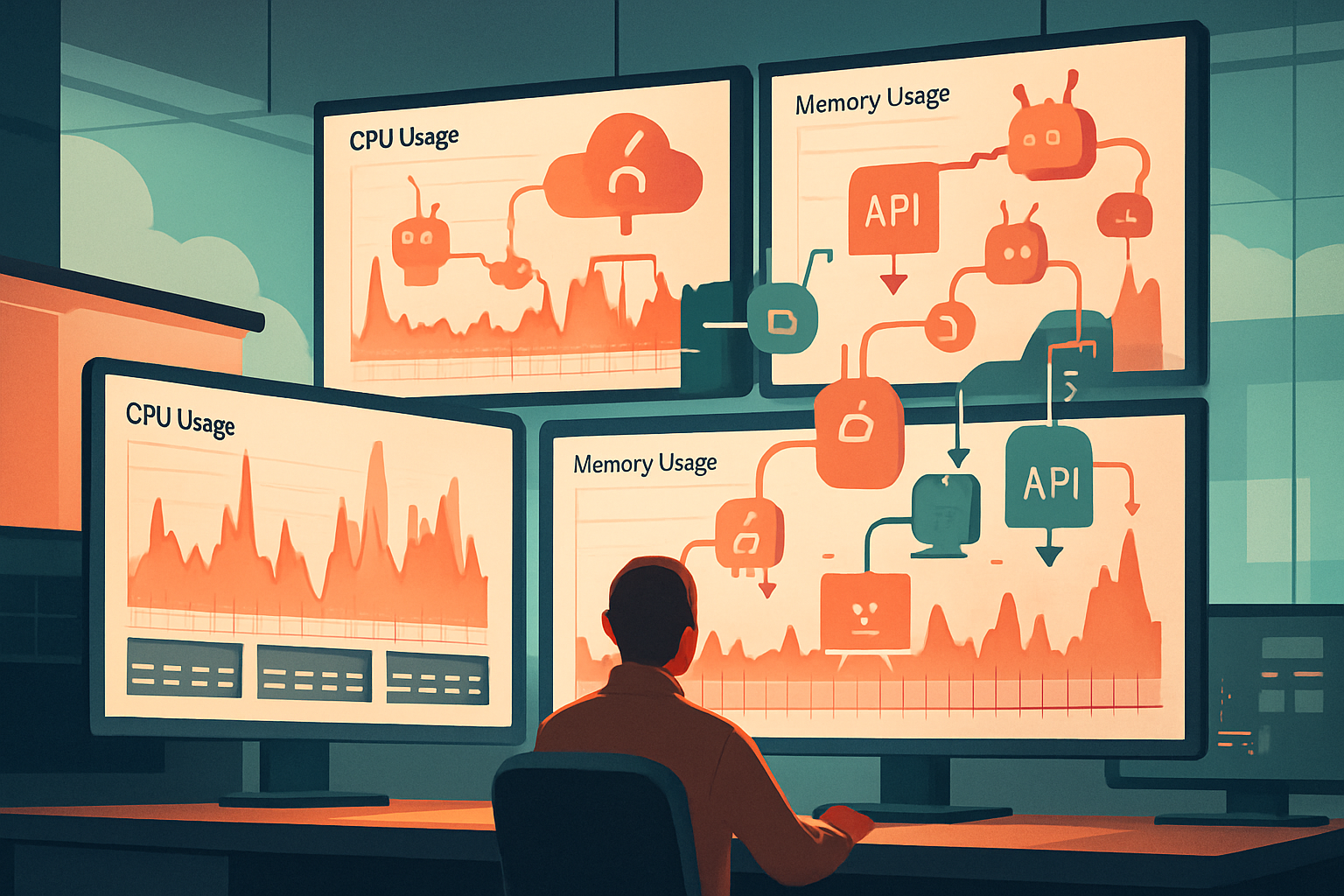
Charges from autonomous agents disrupt capacity adjustment mechanisms. Threshold-based, predictive, and even machine learning approaches struggle to forecast needs. New avenues are emerging to enable continuous response, instrument feedback, and decentralize resource management.
Agentic Traffic Undermines Forecasting and Adjustment
Unpredictable behaviors and complex interactions characterize the traffic generated by agents, challenging traditional autoscaling approaches. This traffic can cause sudden spikes that existing systems cannot anticipate, leading to highly variable load profiles from one moment to the next. Even AI-based solutions face difficulties in accurately predicting resource needs due to the complexity of the systems and the nature of this traffic.
Continuous Adaptation, Feedback Looping, and Decentralization
To address these limitations, it is necessary to rethink autoscaling. Proposed solutions include creating systems capable of instantaneously reacting to fluctuations, adding feedback mechanisms to adjust allocation based on observed behaviors, and utilizing decentralized architectures to ensure more flexible management. The transformation of agentic traffic thus necessitates a reevaluation of existing strategies to ensure optimal resource management in an evolving context.
Thresholds, Prediction, AI: Three Approaches and Their Blind Spots
Three generations of autoscaling have emerged. The first relies on static thresholds applied to metrics such as CPU or memory, which exposes systems to overloads or underutilization in the event of unforeseen variations. The second generation uses forecasting models and historical data to anticipate demand, but these models quickly become inadequate if usage evolves rapidly. The third generation incorporates machine learning algorithms to optimize in real-time and attempt dynamic adaptation, but it encounters its own limitations as demand becomes too complex to predict.
Brief IA — L'actualité IA en français
L'essentiel de l'actualité de l'intelligence artificielle, décrypté et expliqué chaque jour.