AI Influencers: The Blurred Line Between Real and Virtual
The Emergence of AI Influencers: A Subtle Yet Significant Evolution
The first AI influencers made their debut on social media with a distinct digital identity that was easily recognizable. These entities, such as Lil Miquela, with her signature straight bangs and freckles, or Imma with her bright pink bob, were obvious digital creations. Shudu Gram, with her flawless complexion, was also among these pioneers. At that time, collaborations with these virtual avatars were announced with great fanfare, requiring substantial resources in terms of studios, funding, and coordination to produce quality content.
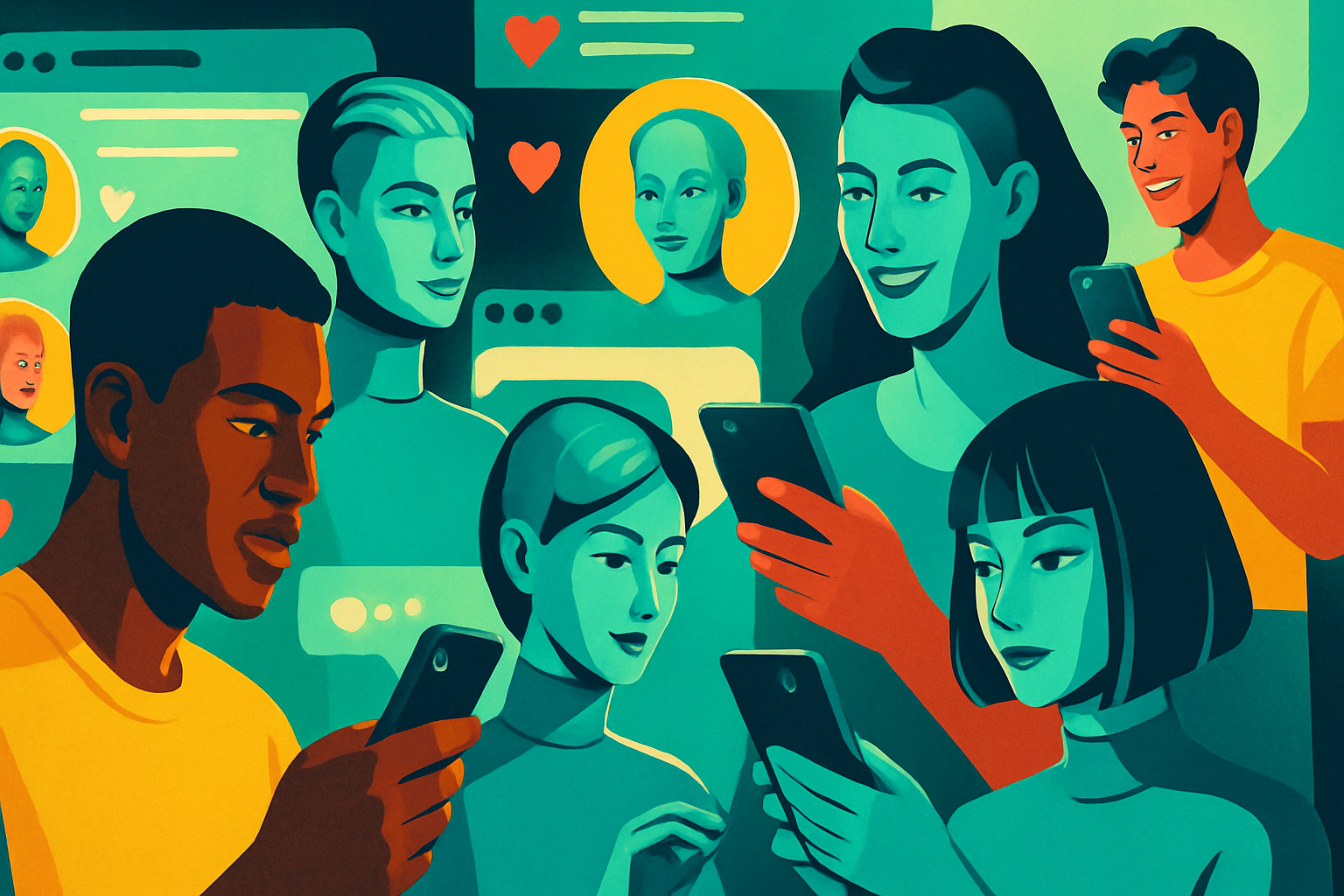
However, over time, these fictional characters began to blend more subtly into the digital landscape. Figures like Emily Pellegrini and Aitana Lopez emerged, increasingly resembling the appearance and behavior of real users. These avatars share life moments that seem authentic, such as outings at upscale restaurants or prestigious events like Coachella or Wimbledon. While they may not be necessarily more accessible than traditional human influencers, they blur the lines between the real and the virtual.
It is important to note that these accounts are not always the result of individual initiatives. For example, Aitana Lopez is the product of The Clueless, a Spanish creative agency specializing in managing AI influencers. On the other hand, Emily Pellegrini was created by an individual known as Professor EP, who previously worked with creators on OnlyFans and now offers courses to teach the creation of AI influencers.
The Ubiquity of AI-Generated Content
The novelty of AI influencers is gradually fading as their numbers increase. Today, they are part of an incessant flow of AI-generated content flooding social media. This content includes text generated by chatbots, images and videos of varying quality, and even musical creations that have recently circulated across platforms.
These fictional characters are now ubiquitous. They are used to promote products of questionable quality, deceive users with false images, spread misinformation, and sometimes even hate speech. Some target specific niches, often of a sexual nature. Alongside this, many avatars simply replicate what is popular among human creators, merely adding their own digital face.
The challenge lies in assessing the actual impact of these AI creators. Platforms do not publish data on the number of users who are actually avatars, and most of these accounts fail to achieve sufficient notoriety to attract media attention. Databases like Virtual Humans list hundreds of popular avatars, but this represents only a fraction of existing accounts, with the majority remaining unnoticed.
One reason these accounts evade detection is the constant improvement of the technology used to create them. Static images of fictional characters can now be realistic enough to deceive an unsuspecting eye, especially in a feed where real influencers heavily use filters and editing effects. Videos and audio follow this trend, allowing virtual characters to have credible voices and movements. Moreover, the tools needed for their creation have become accessible to the general public, thanks to companies like Google and OpenAI, as well as specialized services like Higgsfield, HeyGen, and ElevenLabs. Today, almost anyone can create an AI influencer without needing a studio or significant financial investment.
The Challenges Platforms Face with AI Influencers
Social media platforms find themselves confronted with a dilemma they do not seem eager to resolve. After years of battling AI-generated media, most major platforms have implemented policies to regulate these synthetic contents. However, beyond the requirement for labeling, these rules often merely integrate such content into existing categories like scams, spam, or impersonation. AI avatars, designed to mimic real people, do not easily fit into these categories. They do not necessarily commit fraud, do not post graphic content, and do not claim to be someone else—who could they impersonate, after all? And if their posts are clearly identified as AI-generated, it is difficult to determine which rules they violate.
Le brief IA que les pros lisent chaque soir
Les 7 actus IA du jour, décryptées en 5 min. Gratuit.
Inclus dès l'inscription : notre sélection des meilleurs guides & comparatifs IA.
Choisissez votre rythme
Gratuit · Pas de spam · Désabonnement en 1 clic
For now, platforms seem content with this ambiguity, neither fully welcoming nor completely rejecting AI creators. They adopt a contradictory stance, promoting AI as a creative tool while trying to contain a flood of low-quality content. YouTube, TikTok, Instagram, and others have developed rules to label synthetic media, particularly those that are realistic, while promoting their own AI tools, including some that can clone or simulate users. However, these rules often focus on individual posts rather than the accounts and personalities behind them, leaving AI influencers in a gray area.
In this uncertainty, the ecosystem of AI influencers continues to thrive. Market estimates predict that the virtual influencer sector could be worth over $60 billion by 2030, up from about $12 billion currently. Their cultural influence is also growing, with awards given to AI influencers, beauty contests, dedicated talent agencies, and a thriving market of synthetic creators selling courses and tools to help people create and manage their own avatars, often with the promise of passive income without a face. This resembles a digital gold rush, with a few visible successes and many people selling the tools necessary for this quest.
Future Prospects for AI Influencers
A change seems inevitable. The low-quality content generated by AI is becoming increasingly irritating, and there is a limit to what a platform can endure before it becomes unusable, especially if it refuses to allow users to filter this content. The fake characters pretending to be real represent an even more intimate version of this problem. But beyond labeling and enforcing existing rules, platforms seem primarily to be waiting to see what happens. For them, engagement remains engagement, whether it comes from a fictional creator or a real user. As long as synthetic creators adhere to current rules, there appears to be little incentive to crack down.
The sustainability of the idea of having AI avatars online is also in question. If so many of them are created solely to generate revenue from human users, what happens when demand decreases? There are only a limited number of people willing to purchase courses and tools to create their own influencers, for example. This assumes that social media can survive the influx of AI influencers. By definition, this requires a critical mass of human users to maintain the social aspect. If left unchecked, networks risk collapsing under the weight of these fake characters, while human users will inevitably be pushed away.
This could change if public anger continues to grow. The backlash against deepfakes, identity theft, and synthetic spam is already prompting lawmakers and regulators to pay more attention, especially after incidents involving non-consensual sexual deepfakes. The AI Act in Europe could play a major role, especially as its transparency obligations for AI-generated content come into effect. Regulations will require deployers of generative AI systems to clearly disclose AI-generated or manipulated content, which could prompt companies to ramp up reporting of AI content or face potentially hefty fines. But even in this case, the focus remains largely on content, not on the fact that the account publishing it represents a real person.
As with so many things on social media, the burden falls on users. Many platforms have effectively delegated the task of moderating AI content to users, relying on them to spot and report suspicious profiles. But self-moderation is a poor and unsustainable response to something designed to evade attention. There is already a growing appetite for AI-free spaces. If platforms refuse to draw boundaries between the real and the unreal themselves, it is likely that users will draw them in their place.
The Political Implications of AI Influencers
Among the most prominent AI influencers recently, some display marked political tendencies, which could accelerate regulatory awareness. Danny Bones, a fake white nationalist rapper backed by a far-right political party in the UK, exemplifies this phenomenon. Like human influencers, many AI avatars are built around specific identities and communities, such as race, disability, politics, and nationality. For example, the MAGA fantasy girl Jessica Foster heavily leans on sexualized military aesthetics and Trumpism. Not all avatars necessarily align with their creators: the black AI model Shudu Gram, for instance, was created by a white man. Emily Pellegrini is also the product of a man, Professor EP, who has disclosed that the character is built from content he licensed from an anonymous creator on OnlyFans.
Brief IA — L'actualité IA en français
L'essentiel de l'actualité de l'intelligence artificielle, décrypté et expliqué chaque jour.