Lute Raises $20 Million for Its Robotic Models
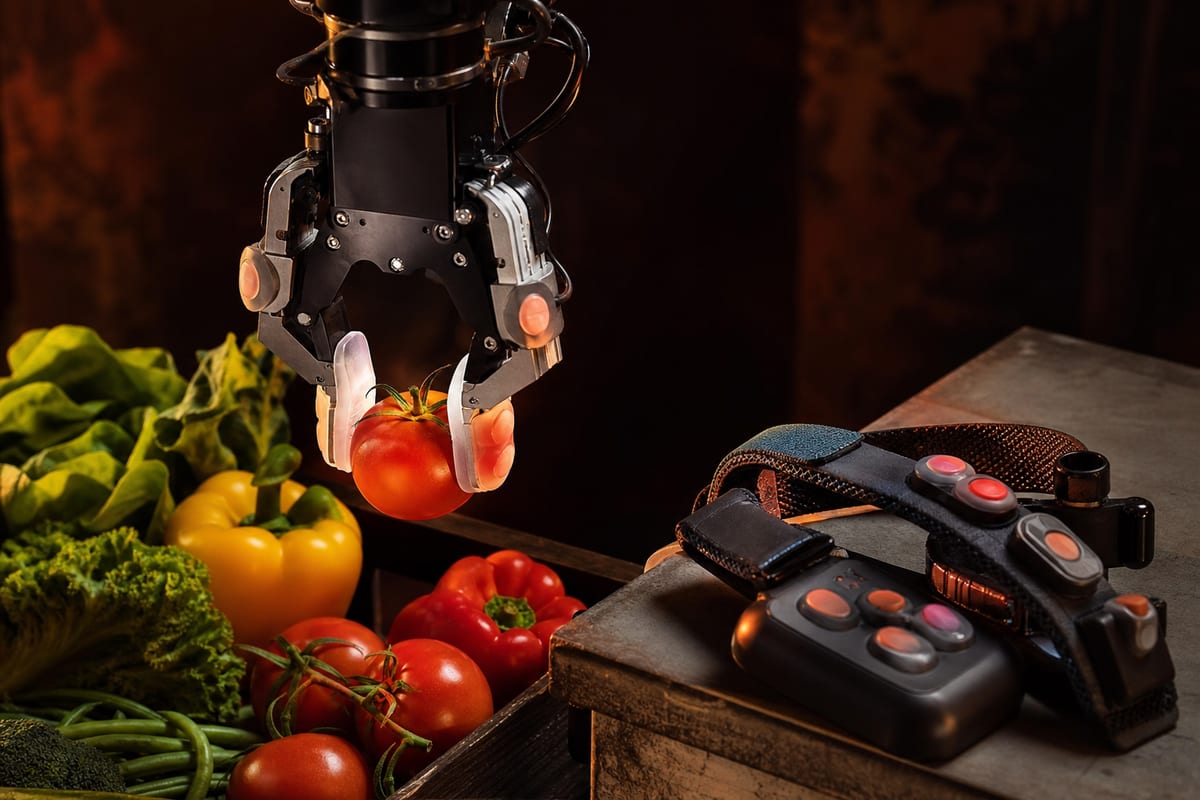
Lute, a Warsaw-based physical AI startup, announced on Tuesday that it has raised $20 million in pre-seed and seed funding to develop touch-trained robotic models. Its first model, Lute-0, has been launched, but advanced comparative performance relies on its own evaluations.
Robots Still Require Human Assistance
At the sites where they are deployed, the robots operate independently when the task allows; a person intervenes remotely when assistance is needed. FORWARD.one estimates that about 90% of the time is spent unsupervised. Errors encountered and subsequently corrected are reused for training and improving subsequent installations.
Ten months after its launch, Lute's models are functioning at a company it presents as the leading European distributor of automotive parts. OTB Ventures estimates its annual revenue at $6 billion and also notes the use of the models in hospital corridors. Lute is also working with major retailers and collaborates with integrators responsible for installing the robots at their clients' sites, initially in healthcare and manufacturing.
Lute is Developing Models Combining Vision and Touch
The majority of robots and physical AI models rely exclusively on cameras. Lute's founders remind us that while cameras can locate an object, they do not indicate the force with which it is grasped, its potential slippage, or its fragility. According to Paweł Budzianowski, CEO of Lute, tactile information is still lacking for reliably executing real-world tasks.
With partners, the startup has developed small, flexible sensors incorporated into portable equipment to collect tactile data anywhere. Lute-0, for its part, learns from videos the changes in a scene, which it translates into robotic gestures. It marks the beginning of a series that the company plans to train jointly with visual and tactile information.
The AI brief the pros read every evening
The 7 best AI stories, the essentials in 5 min. Free.
Included when you join: our pick of the best AI guides & comparisons.
Choose your rhythm
Free · No spam · Unsubscribe in 1 click
In Zurich, Enact is also working on applying touch to robots. The company secured $30 million in October to pursue this goal.
Lute's Comparisons Remain Internal
To evaluate Lute-0, its first launched model, Lute compared it to π0.5, the open-source model from Physical Intelligence, on retail tasks. The company claims to achieve equivalent or superior results: 76% success in manipulating vegetables compared to 22%, and 98% for soft snacks compared to 70%. It also claims a response time that is twice as fast. These measurements are internal; no independent results have been consulted by TNW.
Lute also claims to have used significantly less data for pre-training, with much faster training. However, its investors do not agree on the same proportions: OTB Ventures mentions about one-twentieth of the data and one-quarter of the training steps, while FORWARD.one suggests about one-tenth of the pre-training data.
Investors and Lute's Team
OTB Ventures and FORWARD.one co-led the funding, while Credo Ventures and Seedcamp had led the pre-seed round. Inovo VC, Borusan Ventures, ff Venture Capital, and angel investor Naval Ravikant also participated. The funds are intended to finance tactile data, model training, and customer acquisition.
Founded in January and based in Warsaw, Lute has a team of 16 people split between the Polish capital and the Bay Area. Recruitment is ongoing in Warsaw as well as in San Mateo, California.
Paweł Budzianowski holds a PhD in machine learning from Cambridge and led the specialized team at PolyAI. He also co-founded K-Scale Labs, which manufactured low-cost open-source humanoids. Krzysztof Walas, co-founder and CTO of Lute, was an associate professor at the Poznań University of Technology. He has also advised Nomagic, a Polish company specializing in warehouse robotics.
Brief AI — AI news in French
The essentials of artificial intelligence news, decoded and explained every day.