Marlowe Raises $277 Million for AI Inference
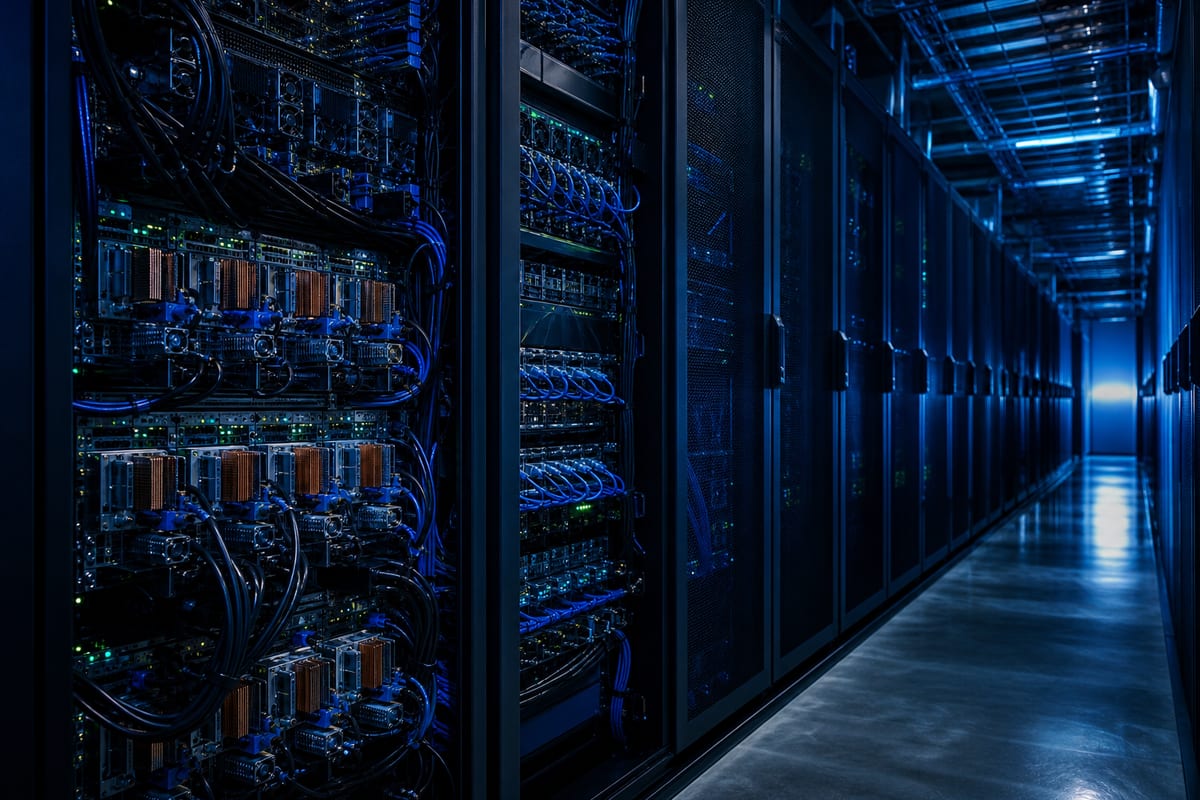
Marlowe, founded by Dan Lewis and Kutta Srinivasan, has raised $277 million to develop infrastructure dedicated to AI inference. The company is starting with AMD and Etched, with no Nvidia chips for now. It announces a valuation of $1.15 billion.
Marlowe plans to finance each site separately
Facilities with tens of megawatts are intended to validate Marlowe's approach, explains CEO Dan Lewis, before separately financing additional capacities. The founders are allocating a significant portion of the capital to processors, networking hardware, site operations, and hiring. Lewis asserts that some young companies have secured four to five times more funding for slightly lower computing power, on a comparable timeline.
Accel led the round, which, according to Lewis, includes a previous, more modest funding round led by Eclipse. The founder and CEO of that fund, Lior Susan, serves as the executive chairman of Marlowe. Ido Susan, founder and CEO of DriveNets, a specialist in data center networking, sits on its board.
Bessemer, Altimeter, Atreides, Journey, and Valor have also invested. Among the individual investors are Henry Kravis, co-founder of KKR, Dara Khosrowshahi, CEO of Uber, Aaron Levie, CEO of Box, and Ryan Roslansky, former CEO of LinkedIn. Mark Okerstrom, formerly CFO and then CEO of Expedia, and later president of Convoy, is also participating in the funding.
When asked about exposure to external factors in this capital-intensive business, Lewis believes that the transformation of AI and data usage is just beginning. He also cites a diverse customer base and commitments of varying durations, rather than dependence on a single large client that could withdraw.
Marlowe customizes chips for client tasks
Inference refers to the use of a model in a service or product, as opposed to its training. Marlowe designs and operates the systems necessary for this execution. Its founders say they have observed strong demand at Microsoft, in the face of centers still primarily designed for training models. Lewis mentions continuously reserved capacities beyond what is available and advocates for AI that is financially accessible to a broader audience.
Demand for inference has grown faster than the available capacities, driving costs up. Challenges in electrical supply, permitting, and funding needs complicate new constructions. Marlowe reports a 40% increase in the cost of building centers since 2020.
Marlowe's CTO, Kutta Srinivasan, notes that at his previous tech employers, competing processors to Nvidia made up only a small fraction of the equipment. When a model arrived, the most experienced engineers favored Nvidia, he says. A significant portion of other equipment could then remain idle, underutilized, or unable to execute recent models and tasks. Marlowe's engineers work directly on client processing to better leverage these alternatives and reduce dependence on a single supplier.
Le brief IA que les pros lisent chaque soir
Les 7 actus IA du jour, décryptées en 5 min. Gratuit.
Inclus dès l'inscription : notre sélection des meilleurs guides & comparatifs IA.
Choisissez votre rythme
Gratuit · Pas de spam · Désabonnement en 1 clic
The founders argue that a joint adaptation of chips, networking, and software to applications improves efficiency and reduces costs. Marlowe claims improvements of 10% to 20% at each layer, including power management. According to the company, their combination would provide two to three times more tokens per dollar and per watt than traditional GPU cloud computing offerings, with these tokens being the textual fragments manipulated by the models. Lewis believes that the skills needed to leverage the new processors will make the difference: simply installing them is not enough.
A first center is set to operate in December
The timeline announced by the founders begins in December with a site equipped by Etched. Its main user is expected to be a large AI-assisted programming company. A larger facility, based on AMD's Helios systems, is anticipated in the second quarter of 2027.
The two initial facilities have contracts; a letter of intent concerns the next one. Marlowe states that it has signed three commercial agreements, without disclosing the names of its clients or the locations. The company does not rule out Nvidia for the future.
Other suppliers are betting on multiple manufacturers
Gimlet Labs is also developing an inference infrastructure that combines different types of processors. The company raised $300 million in September, with a valuation of $3 billion. General Compute, engaged in a similar approach, raised $100 million in October.
CoreWeave, the largest of the specialized suppliers commonly referred to as "neoclouds," leases capacities almost exclusively equipped by Nvidia. The latter owned about 47 million shares of CoreWeave as of September 30. To expand its centers, CoreWeave has accumulated debt of around $47 billion. Nvidia is also undergoing a leadership change following the resignation of its CEO Jensen Huang this month.
The founders have worked at Microsoft
Founded in May, Marlowe has nearly 30 employees and splits its locations between Bellevue, Washington, and Redwood City, California. Lewis explains this choice by the presence of partners, clients, and talent; he sees Bellevue in particular as a developing AI hub. At Microsoft, Srinivasan served as corporate vice president and technical lead for AI infrastructure.
He initially worked at Microsoft on DirectX and on games including Halo 3, before spending eight years at Valve, where he led the development of the first mobile application for Steam. He later held the position of principal architect for machine learning training infrastructure at Facebook. After a stint as a technical fellow at LinkedIn, he joined CoreAI at Microsoft in 2025.
Lewis, a former general manager at Amazon, co-founded Convoy, a platform connecting shippers and truckers. It was valued at $3.8 billion before its closure in 2023, amid a freight transport recession and a contraction in venture capital. Flexport acquired its technology and brought Lewis on as a technical advisor.
In February 2025, Lewis returned to Microsoft, where he had previously worked. Initially a product director focused on AI for enterprises, he later became corporate vice president.
Brief IA — L'actualité IA en français
L'essentiel de l'actualité de l'intelligence artificielle, décrypté et expliqué chaque jour.