Motional and MIT: CW-Net Explains the Choices of an Autonomous Car
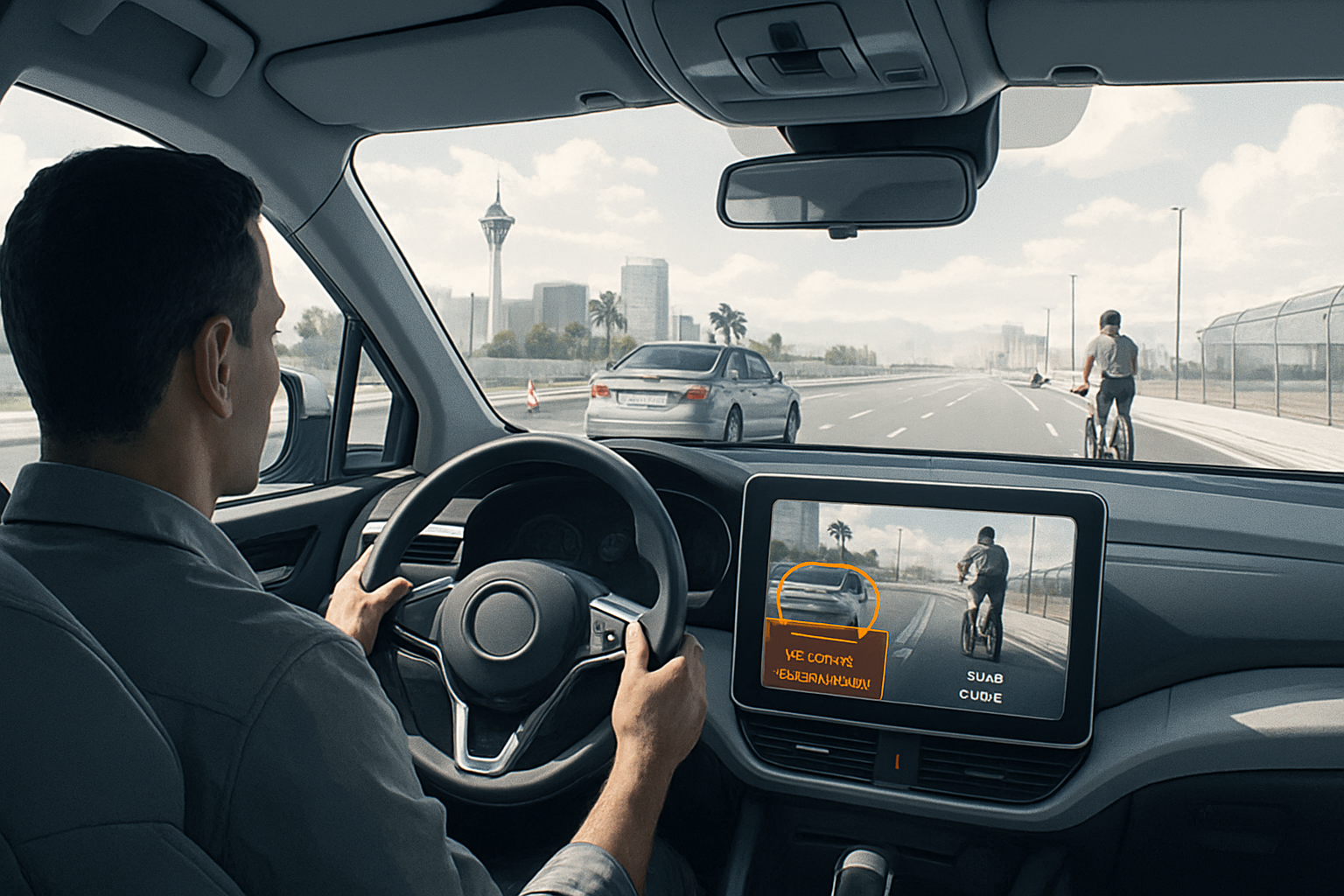
Motional and researchers from MIT have designed CW-Net, a device that exposes in real-time the concepts guiding autonomous driving. Tested on the roads of Las Vegas with a safety driver, it shows less than 1% deviation compared to the best algorithms, while making critical decisions traceable. The approach, published in Nature, is presented as a response to the transparency expectations of authorities and operators.
Less than 1% Performance Deviation Despite Explainability
The researchers compared CW-Net to benchmark driving algorithms and observed a driving capability gap of less than one percent. Motional acknowledges that explainability can impact speed and performance, but the measured cost remains below a tight threshold. The trials conducted in Las Vegas are presented as enlightening for operational use rather than solely for research. A safety driver who can see whether a stop is due to a vehicle hallucination or a fallback system can adjust their reaction and provide more precise information than if they relied solely on observed behavior. This visibility also enhances the diagnostic speed of teams and their ability to differentiate between a desired maneuver and a fault.
Trials Around Las Vegas: Two Incidents Analyzed
The Motional and MIT team deployed CW-Net on an autonomous vehicle driven by an experienced safety operator, collecting data on a private circuit and public roads around Las Vegas. Unlike explainable AI work often confined to simulations, the trials used an earlier experimental version of the deep learning planner, deemed competitive but improvable. In one case, the car stopped several times near a cone. Even after it was removed, the stop persisted. The CW-Net display revealed a vehicle hallucination triggered by the experimental planner, traced back to patterns from training, which allowed for understanding, anticipating, and correcting the anomaly. In a second case, the vehicle successfully detected a cyclist and stopped, but CW-Net showed that the planner was not relying on the presence of the cyclist. The safety driver increased their caution, and subsequent analysis confirmed that the braking came from a fallback system rather than the main planner.
Le brief IA que les pros lisent chaque soir
Les 7 actus IA du jour, décryptées en 5 min. Gratuit.
Inclus dès l'inscription : notre sélection des meilleurs guides & comparatifs IA.
Choisissez votre rythme
Gratuit · Pas de spam · Désabonnement en 1 clic
Making Decisions Readable: Actionable and Traceable Concepts
CW-Net converts the internal logic of autonomous driving into interpretable concepts, such as "Vehicle stopped nearby" or "Close to a cyclist." Motional indicates that these concepts could be displayed on a dashboard to visualize those influencing the decision at the moment it is made. The final decision-making system acts directly on these concepts, so that a braking action is linked to an explicit trigger: a design described as causally faithful by Motional, unlike natural language explanations that may sometimes be plausible without guaranteed accuracy. The goal of CW-Net, proposed by Motional and MIT, is to translate internal calculations into human-understandable elements while addressing the critique of the black box, as increasingly used and effective neural networks do not expose their reasoning and are labeled as black boxes by engineers.
Publication, Positioning, and Regulatory Expectations
The results were published in Nature by a team including Motional, with its CEO Laura Major, and researchers from MIT CSAIL. Laura Major advocates for the importance of native interpretability over a purely end-to-end approach, which she believes could achieve 80 to 90%, or even 95%, without being sufficient to remove the driver or gain the trust of communities and customers. Motional links CW-Net to increased pressure on operators as autonomous driving expands into new markets and jurisdictions. Authorities are demanding more transparency regarding how AI makes its decisions, and Motional expects tools like this to transition from research projects to baseline requirements. Beyond passenger cars, autonomous drones and robotic surgery are cited among critical safety areas where means of explaining capabilities, limitations, and unexpected behaviors will be necessary.
Brief IA — L'actualité IA en français
L'essentiel de l'actualité de l'intelligence artificielle, décrypté et expliqué chaque jour.