NHS: AI and a Blood Test Transform Cancer Screening
Le brief IA que les pros lisent chaque soir
Les 7 actus IA du jour, décryptées en 5 min. Gratuit.
Inclus dès l'inscription : notre sélection des meilleurs guides & comparatifs IA.
Choisis ton rythme
Gratuit · Pas de spam · Désabonnement en 1 clic
A New Hope for Cervical Cancer Screening
The National Health Service (NHS) in England is set to roll out an innovative blood test, supported by artificial intelligence, to enhance cervical cancer screening. This test aims to reduce the need for invasive examinations for women suspected of having this type of cancer. Each year, around 90,000 postmenopausal women are referred to specialists after reporting heavy bleeding, a condition that can be an indicator of cancer. Among them, approximately 10,000 receive a diagnosis of cervical cancer, and unfortunately, 2,700 die from it.
How the PinPoint Test Works
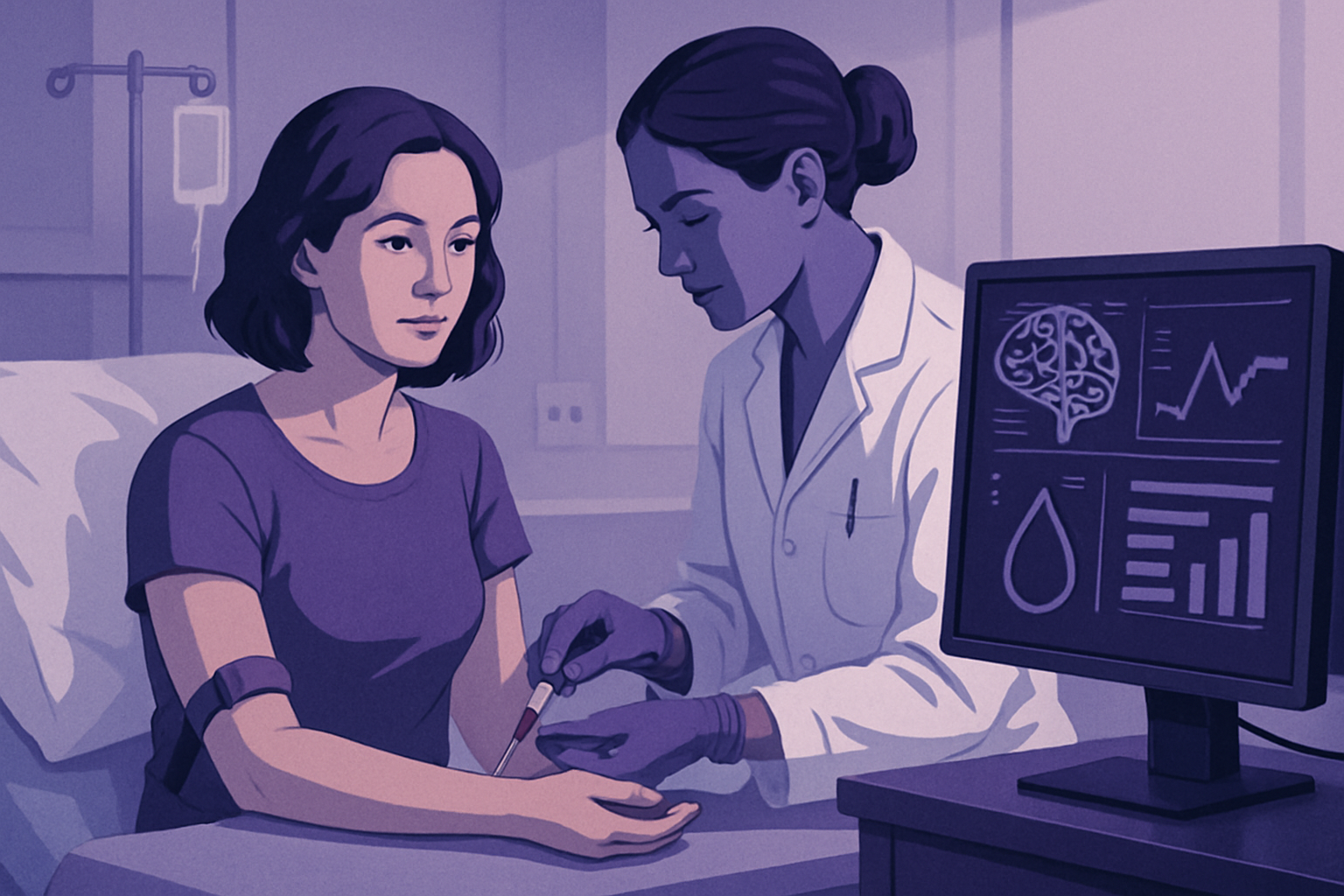
Developed by Leeds-based company PinPoint Data Science, this test uses machine learning algorithms to analyze blood markers and assess cancer risk. By examining around 30 markers, the test categorizes patients into low, high, or very high-risk groups. With a cost of about £30, this test provides doctors with a risk score that integrates into existing cancer referral pathways. This score helps determine whether a patient requires monitoring, further investigation, or priority assessment.
PinPoint describes its test as a multi-cancer tool, already used in diagnostic pathways for various types of cancers, including gynecological, lung, and gastrointestinal cancers. The test was introduced following a trial involving 16,481 patients referred for concerning symptoms of cervical or gynecological cancer in Yorkshire. Results showed that about one in ten women referred for heavy bleeding was actually diagnosed with cancer.
The PinPoint test has demonstrated impressive accuracy, correctly identifying 99.1% of cancer cases as high or very high risk, and offering a negative predictive value of 99.8% for women classified as low risk.
Towards a Less Invasive Diagnostic Pathway
Currently, women suspected of having reproductive system cancer typically undergo pelvic examinations, including transvaginal ultrasound. This procedure, which involves inserting an ultrasound probe into the vagina, can be uncomfortable for some patients. If cancer remains suspected, further examinations such as a biopsy or hysteroscopy may be necessary. The PinPoint test could help identify women at very low risk before resorting to these invasive procedures.
According to PinPoint, about one in five women referred could avoid a transvaginal ultrasound thanks to this test, which would represent approximately 18,000 women per year in England. Professor Sean Duffy, medical director of PinPoint and former national clinical director for cancer at NHS England, emphasizes that the main benefit of the test lies in its ability to rule out women at very low risk.
Dr. Jacinta Walsh, a general practitioner, noted that the current process can require up to six medical visits before ruling out a cancer diagnosis. Therefore, the test could not only shorten this pathway but also free up resources for other patients.
The Potential Impact on the Healthcare System
Tracy Jackson, a consultant gynecologist at Leeds Teaching Hospitals NHS Trust, stated that most women referred do not have cancer, but the examinations can be distressing. The test could help better triage patients, allowing prioritization of those at high risk for more in-depth investigations.
AI in Service of Public Health
The NHS is actively exploring the integration of AI across various medical fields. Tools like MEMORI, used at Kent and Canterbury Hospital, assess infection risk based on routine patient data. An AI triage tool in the NHS app is expected to reach over 200,000 patients in the coming year, with full deployment planned by April 2028.
The government has also invested £20 million to expand the use of AI thoracic ultrasound tools across all NHS trusts by 2029. These tools, already present in half of the trusts, have helped assess over four million patients for lung cancer.
However, further research is needed to evaluate the impact of the PinPoint test on patient outcomes and the NHS's diagnostic capacity. Cancer Research UK considers the test promising but emphasizes the need for additional studies to fully understand its benefits. Samantha Harrison, a spokesperson for the organization, reminded that early detection is crucial for saving lives, but the current diagnosis process is not fast enough.
The organization hopes that this test will allow for the exclusion of endometrial cancer in some women without resorting to further investigations.
Brief IA — L'actualité IA en français
L'essentiel de l'actualité de l'intelligence artificielle, décrypté et expliqué chaque jour.