Recycling: AI Automates Sorting and Improves Quality
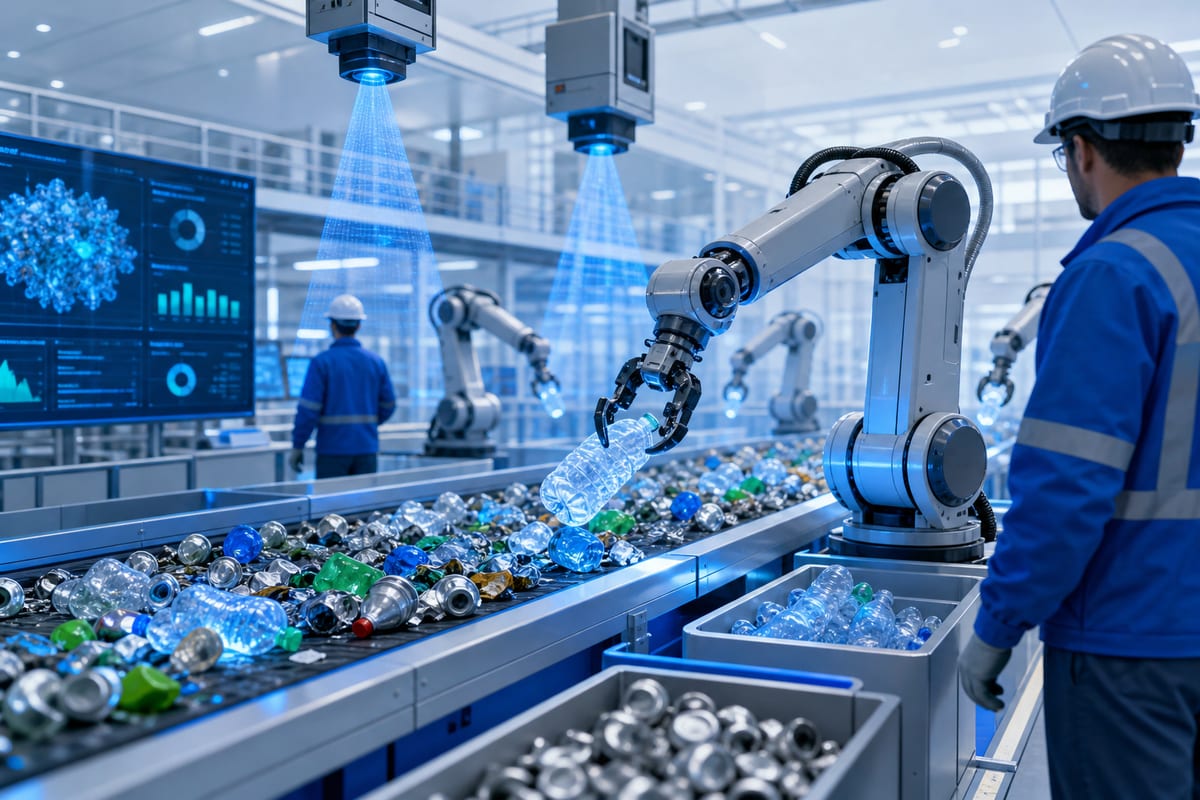
Artificial intelligence is making its mark in sorting centers, where vision systems and learning algorithms are used to identify materials in complex streams, automate sorting, and analyze data. The effects concern costs, speed, and the quality of recovered materials, with a contribution presented as favorable to the circular economy.
Quality of Materials and Economic Outcomes Improve
The integration of artificial intelligence in recycling is seen as a step towards a circular economy, where waste is transformed into reusable resources. Thanks to more precise separation, the quality of recovered materials improves, making them more attractive to buyers. AI-driven optimization of sorting also helps reduce operational costs and increase the profitability of recyclers.
Le brief IA que les pros lisent chaque soir
Les 7 actus IA du jour, décryptées en 5 min. Gratuit.
Inclus dès l'inscription : notre sélection des meilleurs guides & comparatifs IA.
Choisissez votre rythme
Gratuit · Pas de spam · Désabonnement en 1 clic
Computer Vision and Machine Learning at Work
Computer vision systems are employed on sorting lines to identify recyclable materials. Machine learning algorithms analyze data from recycling to optimize processes and predict trends. These technologies allow for highly accurate waste analysis and the differentiation of various types of plastics, metals, and other materials in complex streams.
Automated Sorting and Mixed Waste Management Become Widespread
Companies around the world are adopting artificial intelligence solutions to enhance their recycling operations. AI-driven sorting automation reduces the need for human intervention and speeds up waste processing. More broadly, these technologies assist industry players in better managing mixed waste by identifying and separating recyclable materials more efficiently.
Brief IA — L'actualité IA en français
L'essentiel de l'actualité de l'intelligence artificielle, décrypté et expliqué chaque jour.