Opus 4.8 and Mythos: Anthropic Challenges OpenAI with Safer AIs
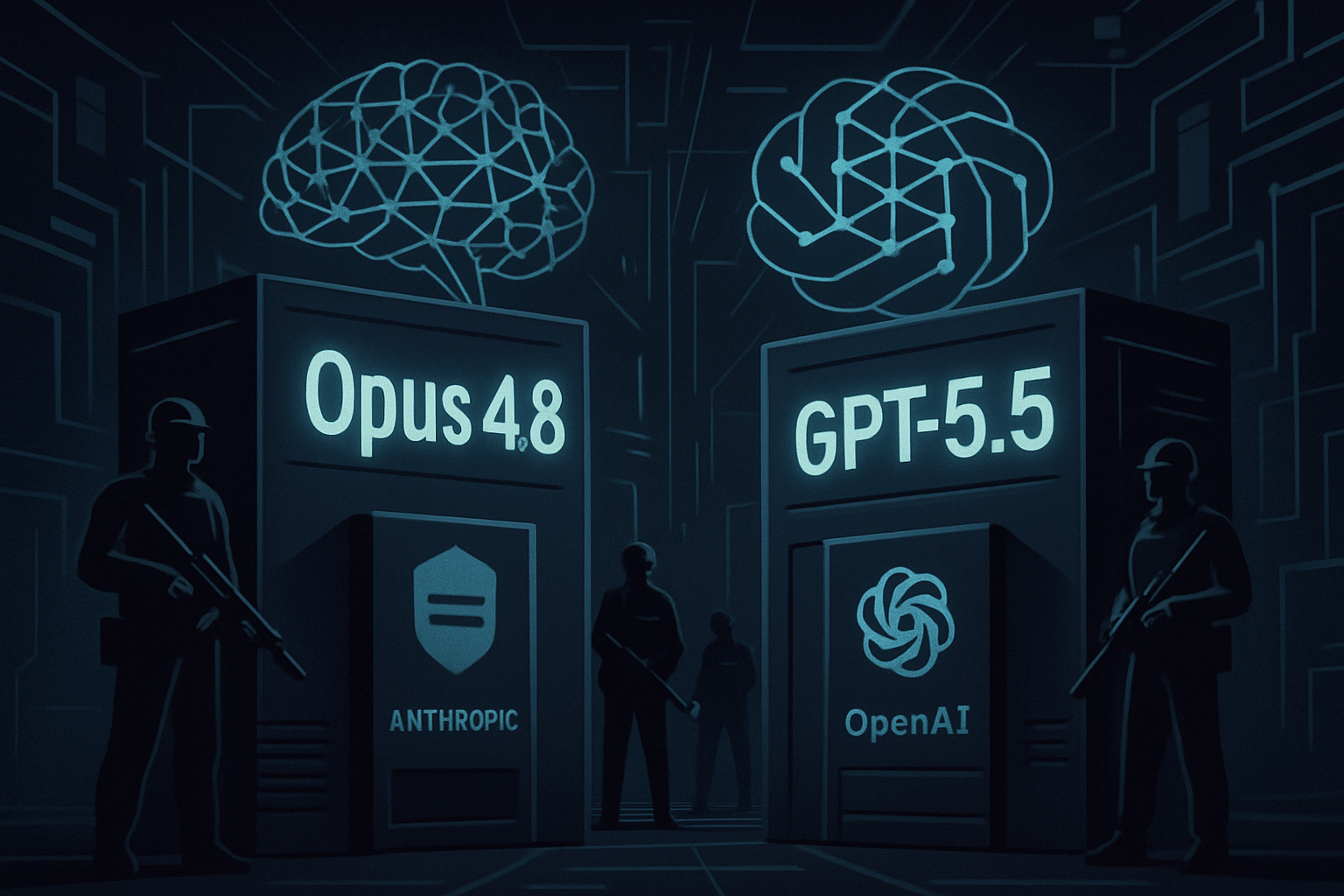
Opus 4.8: An Advancement from Anthropic
On May 28, 2026, Anthropic unveiled Opus 4.8, the successor to Opus 4.7. This model is distinguished by faster reasoning modes and a one-third reduction in cost compared to its predecessor. Opus 4.8 places particular emphasis on coding capabilities, where it achieves better results than version 4.7 on two specific benchmarks. However, it does not fully reach the performance levels of OpenAI's GPT 5.5. Additionally, Opus 4.8 stands out for its prosocial traits, such as supporting user autonomy, a crucial aspect for Anthropic, which has always emphasized the safety and interpretability of its models. Opus 4.7 displayed a honesty rate of 92%, and version 4.8 claims to have "substantially" lower misalignment rates compared to 4.7, in comparison with Mythos Preview.
GPT-5.5 Instant: OpenAI's Response
On May 5, 2026, OpenAI launched GPT-5.5 Instant, a lightweight version of GPT-5.5. This model is characterized by a significant reduction in hallucinations, with 52.5% fewer hallucinated claims compared to GPT-5.3 Instant on critical queries. This improvement in factual accuracy is crucial for reducing misinformation, particularly in sensitive areas like health. GPT-5.5 Instant now replaces GPT-5.3 as the default model in ChatGPT, underscoring the importance of these enhancements for a widely used model.
Nemotron 3 Nano Omni: Nvidia's Innovation
On April 28, 2026, Nvidia introduced Nemotron 3 Nano Omni, a model that enables agents to process multimodal inputs, integrating visual, audio, and textual capabilities into a single system. This unified approach aims to streamline workflows and reduce inference costs, contrasting with traditional systems that require distinct models for each type of data.
Le brief IA que les pros lisent chaque soir
Les 7 actus IA du jour, décryptées en 5 min. Gratuit.
Inclus dès l'inscription : notre sélection des meilleurs guides & comparatifs IA.
Choisis ton rythme
Gratuit · Pas de spam · Désabonnement en 1 clic
Other Developments at OpenAI
On April 23, 2026, OpenAI also launched GPT-5.5, rated by ZDNET with a score of 93/100. This model is considered better and faster than GPT-5.4, with notable improvements in agentic coding and factual accuracy. Although GPT-5.5 is not revolutionary compared to its predecessor, the speed of its launch indicates an acceleration in the model release cycle at OpenAI. Furthermore, OpenAI announced ChatGPT Images 2, the successor to Sora, highlighting the continued importance of image generators in enterprise AI.
Claude Mythos and Opus 4.7: Anthropic's Strengths
Anthropic also showcased Claude Mythos (Preview) on April 7, 2026, a model not yet public, described as too powerful for a standard release. It is particularly capable in cybersecurity tasks, which may indicate that current cybersecurity measures are not prepared to cope with the rapidly evolving capabilities of models. Claude Opus 4.7, launched on April 16, 2026, demonstrated notable improvements in honesty, reduction of sycophancy, and hallucinations, while also showcasing skills in cybersecurity. These advancements are significant for a lab focused on AI model safety.
Previous Evolutions of GPT
On March 5, 2026, OpenAI introduced GPT-5.4, designed for professional work. This model claims to match or surpass human professionals 83% of the time, representing a significant advancement for models capable of handling complex tasks. These improvements are essential for gaining the trust of businesses, a crucial aspect for the adoption of AI models in professional environments.
Claude Opus 4.6: A Key Milestone
On February 5, 2026, Anthropic launched Claude Opus 4.6, redefining standards for autonomous work, particularly in coding. This model demonstrated its ability to handle tasks autonomously, allowing for greater delegation of workflows, a challenge often faced by AI models. This capacity to manage complex tasks independently is crucial for the efficiency of AI models in professional environments.
Brief IA — L'actualité IA en français
L'essentiel de l'actualité de l'intelligence artificielle, décrypté et expliqué chaque jour.